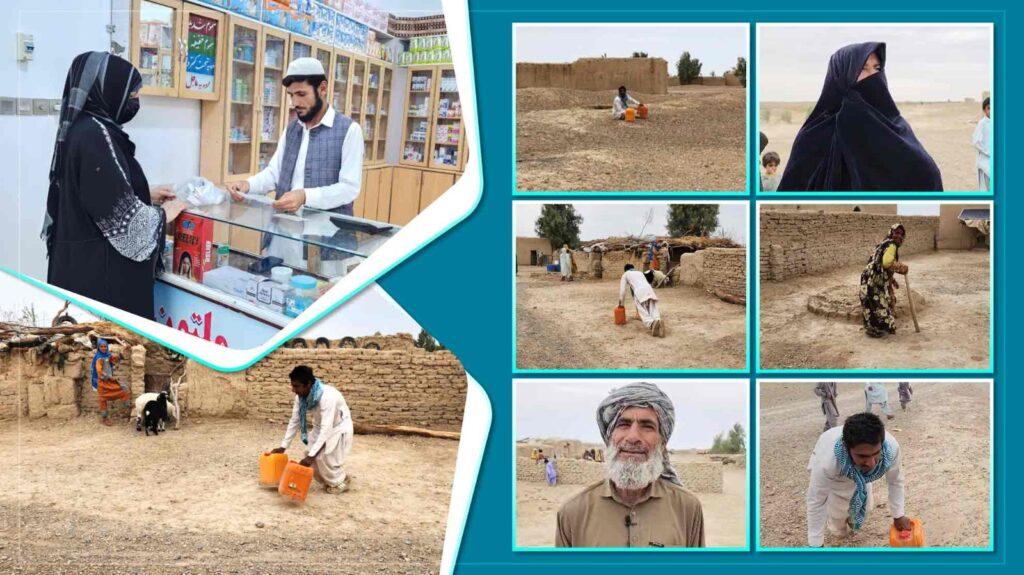

ZARANJ (Pajhwok): Mobile health teams have resumed operations in remote areas of the capital of southwestern Nimroz province after months of suspension following publication of Pajhwok Afghan News reports about the lack of basic services, particularly healthcare.
On May 2, 2025, Pajhwok published a report titled “Nimroz villagers mourn lives lost to no health coverage” and on January 19, 2026 another report titled “Shortages of water, health services, schools affect parts of Nimroz.”
In both reports, residents of several villages complained about the absence of basic services, particularly healthcare.
Some interviewees said there were no clinics in their areas and called at least for the deployment of mobile health teams.
Ustad Abdul Nasir, a resident of Abdulsalam village east of Zaranj city, voiced satisfaction, saying mobile health teams visited their village a few days after his interview with a Pajhwok reporter.
He said: “For nearly six months, mobile health teams had not visited our area. A few days after your report — on January 22 — a mobile team came to our village, examined patients and provided medicine to those who needed it.”
He appreciated Pajhwok for publishing the report, adding: “We realised this action was the result of your report. We sincerely thank you for drawing officials’ attention to the deprivation in our villages.”
He recalled the last time mobile teams had visited the area was on July 5, 2025, after which services halted until early January this year.
He added: “In winter, illnesses increase and most people cannot afford to travel 10 kilometres to the provincial capital for minor illnesses. Transport costs about 500 afghanis and medicine another 500, but now mobile health teams of the Afghan Red Crescent Society (ARCS) provide these services free of charge.”
Similarly, Hashim, a resident of Rostam Khan village in the provincial capital, said mobile health teams had visited their village and were providing free services.
He said: “We are happy you conveyed our voices to officials; your efforts are appreciated. We are poor people and cannot afford to travel to the city. Now doctors come to our area with medicines and even provide IV fluids and injections for some patients.”
Fatima, a resident of Baynaz village in Zaranj, also expressed satisfaction that mobile health teams were visiting and providing healthcare services.
Similarly, Gul Bibi, a resident of Ziarat Sakhi village who had earlier complained about the absence of a clinic during an interview with Pajhwok last year, said: “We are happy the government heard our voices. We thank the authorities for responding to our requests; for the past three months mobile teams have been visiting our village.”
She said a mobile health team now visits the village once every 15 days.
Meanwhile, Naqibullah Norzad, a representative of ARCS in the province, said two mobile health teams were currently operating through the organisation in Zaranj city and Delaram district, mainly serving remote villages lacking access to healthcare.
He added: “Our activities are coordinated with the Public Health Department to avoid overlap, as multiple teams work under that department, so that both we and other organisations can deliver services effectively.”
Responding to a query about why mobile teams had not previously visited these areas, he said: “Whenever we make plans, we coordinate with the Public Health Department, which designates deprived areas for us. We provide services based on those assignments.”
Each mobile health team includes a specialist doctor, a midwife, a pharmacist, a vaccinator and a driver, he concluded.
kk