
KABUL (Pajhwok): Preserving one’s mother tongue is a serious challenge for Afghan migrants living abroad, but experts say that if native languages are forgotten within families, part of the culture and identity of future generations will gradually disappear.
They stress that parents play a key role in teaching and passing on the mother tongue to their children outside the country.
A mother tongue is the first language a person learns within the family environment and uses to express thoughts, emotions and identity. It holds special value and importance because it carries the culture, history and identity of a nation, and plays a vital role in maintaining links between generations.
As a result of more than four decades of war in Afghanistan, millions of Afghans have migrated to different countries. Their children have studied in schools in host countries and, in some families, it is evident that children do not have full command of their mother tongue, with many facing difficulties in speaking, reading and writing it.
Those who migrated in childhood
Manizha, who was one year old when she migrated to Canada with her family, studied there and now works for a private company.
She said: “My parents tried hard to make sure I learned Dari alongside English, but I cannot write it or read Dari script.”
She said that because she studied in English at school and had little time at home, she never practised reading and writing Dari.
Similarly, Zahra, who migrated to the United States at the age of four, said she can speak Dari but not fluently, as she studied in the US and now works there, where she mostly uses English. She added that when she was a child, she attended school daily and spent the entire day there.
She added that her parents also worked and, by the time they returned home in the evening, they did not have the energy to teach her Dari. As a result, she never learned to read or write the language, although she can speak it at a basic level.
Parents’ efforts to preserve the mother tongue
Manizha Rasouli, who has been living in Australia for 17 years, told Pajhwok Afghan News: “I have three children. All of them were born in Australia. English is like their first language; they speak, read and write it well. They can speak Dari, but they cannot read or write it.”
Asked why her children cannot read and write Dari, she said: “As it is only my husband and me here, we have been somewhat negligent in teaching Dari to our children because we both work and spend less time with them.”
She added that many families have children who cannot speak their mother tongue at all because even parents speak to them at home in the common language of the country where they live.
Meanwhile, Abdul Khaliq, who has been living in California, US, for seven years, said: “In our family, we try not to forget our mother tongue. Fortunately, all family members can still speak it, but reading and writing are weaker for some, particularly children who are more engaged with the language of their surroundings.”
He said that, in order to preserve the mother tongue among his children, he buys them storybooks in Dari and encourages them to read and write stories and essays in the language.
Similarly, Farhad Forotan, who has been living in Germany for 10 years, said he has four children and the common language there is German.
He said his children are busy learning school subjects in German and do not know how to read and write their mother tongue, although they speak Dari at home.
Frogh Tarin, who has been living in France for nearly three years, said: “I have one daughter. My husband and I value our national languages and try to ensure that our daughter can read and write well, because Dari is our mother tongue and part of our national identity.”
Experts: Afghan families abroad should teach their children
Researcher Abdul Rahman Ehsas, a member of the Afghanistan Academy of Sciences, said the mother tongue was the foundation of cultural identity and an important factor in shaping personality, critical thinking and children’s self-confidence. In his view, it preserves intergenerational ties and makes learning easier.
He added that strengthening the mother tongue enhances cultural identity, improves family and social relations, and facilitates the learning of other sciences and languages.
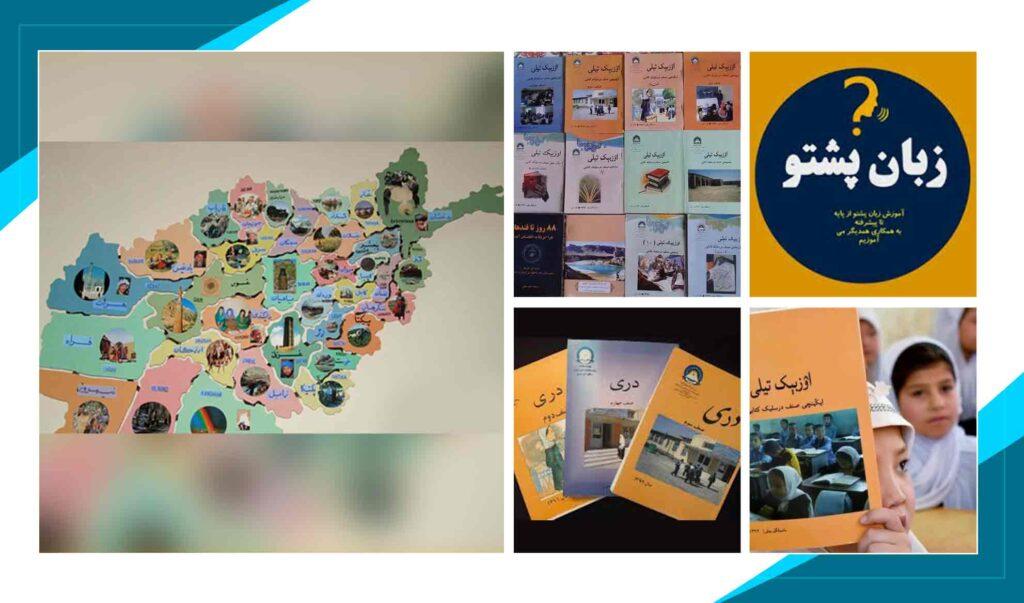
He said Afghanistan has many national and local languages, contributing to the country’s cultural diversity.
Pashto and Dari are recognised as the national and official languages, while Uzbeki, Balochi, Nuristani, Turkmeni, Ormuri and other languages are also spoken in different parts of the country.
Ehsas said: “Our compatriots living abroad have a great responsibility towards their children and future generations to preserve their identity. This is only possible if parents speak to their children in their mother tongue and encourage them to read and write it.”
Meanwhile, cultural expert Mohammad Moneeb Ibrahimi said: “We have two national languages in the country and more than 33 languages are spoken in Afghanistan. We must speak our national and mother languages, value them and work for their development.”
Referring to Afghan migrants worldwide, he said parents are obliged to inform their children about the importance of learning their national and mother tongues and to teach them.
kk/sa