
KABUL (Pajhwok): After spending six years as a refugee in Iran, Masouma Hassani has turned the skill she learned abroad into a source of income after returning to Afghanistan.
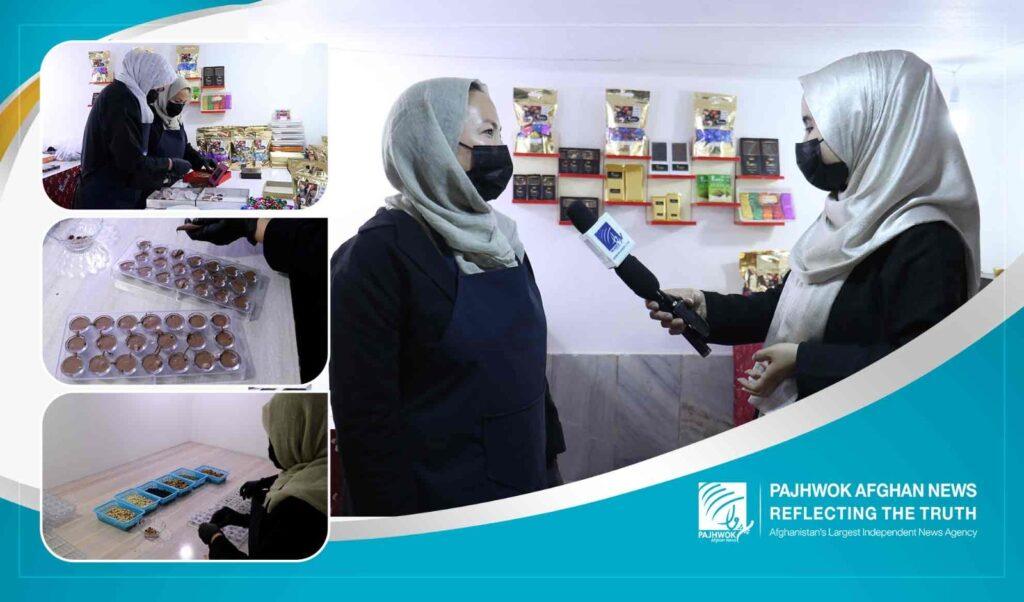
She is now working to support domestic production, promote self-reliance, and create job opportunities through a small chocolate-production workshop in Kabul, the capital of Afghanistan.
At a time when many returnees face unemployment and limited job opportunities, Masouma, who recently returned from Iran, has established a small chocolate factory inside her home in Kabul city, creating work not only for herself but also for members of her family.
Masouma and her family migrated to Iran six years ago because of economic hardship and unemployment. While living in Tehran, she worked in a chocolate-making factory.
Although she completed school up to the 12th grade, migration prevented her from continuing higher education.
“When we went to Iran, I could not continue my education there either,” she said. “I told myself that I had to work and learn a skill, so I started working in a chocolate factory.”
A year ago, she returned to Afghanistan with her family. According to her, unemployment was one of the biggest challenges they faced, but she refused to give up and instead turned part of her home into a small chocolate-production workshop.
“I learned this work in Iran,” Masouma said. “When I came back to Afghanistan, I thought, why not continue this skill here? Job opportunities for both women and men are limited, so I decided to start this business.”
She launched the business with an investment of 300,000 afghanis and named her product line “Kania,” which she says means “a treasure of flavors.”
According to her, the chocolates are made from cocoa, pistachios, almonds, and raisins, and the products quickly attracted many customers.
She says the workshop produces up to ten kilograms of chocolate daily, although production rises significantly during Eid holidays and special occasions.
However, Masouma says competing with imported products remains one of the biggest challenges for her business.
“The colorful packaging and extensive advertising of foreign chocolates have caused many consumers to pay less attention to domestic products,” she said. “Some people do not even try local products once, even though we use high-quality ingredients, especially local dried fruits.”
Masouma hopes that with greater financial support in the future, she will be able to purchase modern machinery, expand production, hire more workers, and lower the prices of her products.
“If we have better facilities and more funding, we can expand production, improve packaging, and create jobs for even more people,” she said.
Masouma sells her products both in person and online. She says all members of her family contribute to production, packaging, and sales.
Amena Hassani, Masouma’s sister, who works alongside her, says she mainly handles packaging and customer orders.
“Customers who place orders for celebrations, Eid gifts, and special occasions usually contact us two days in advance so their orders can be prepared according to their preferences and tastes,” she said.
According to Amena, they provide different packaging styles based on customers’ demands and preferences.
sa