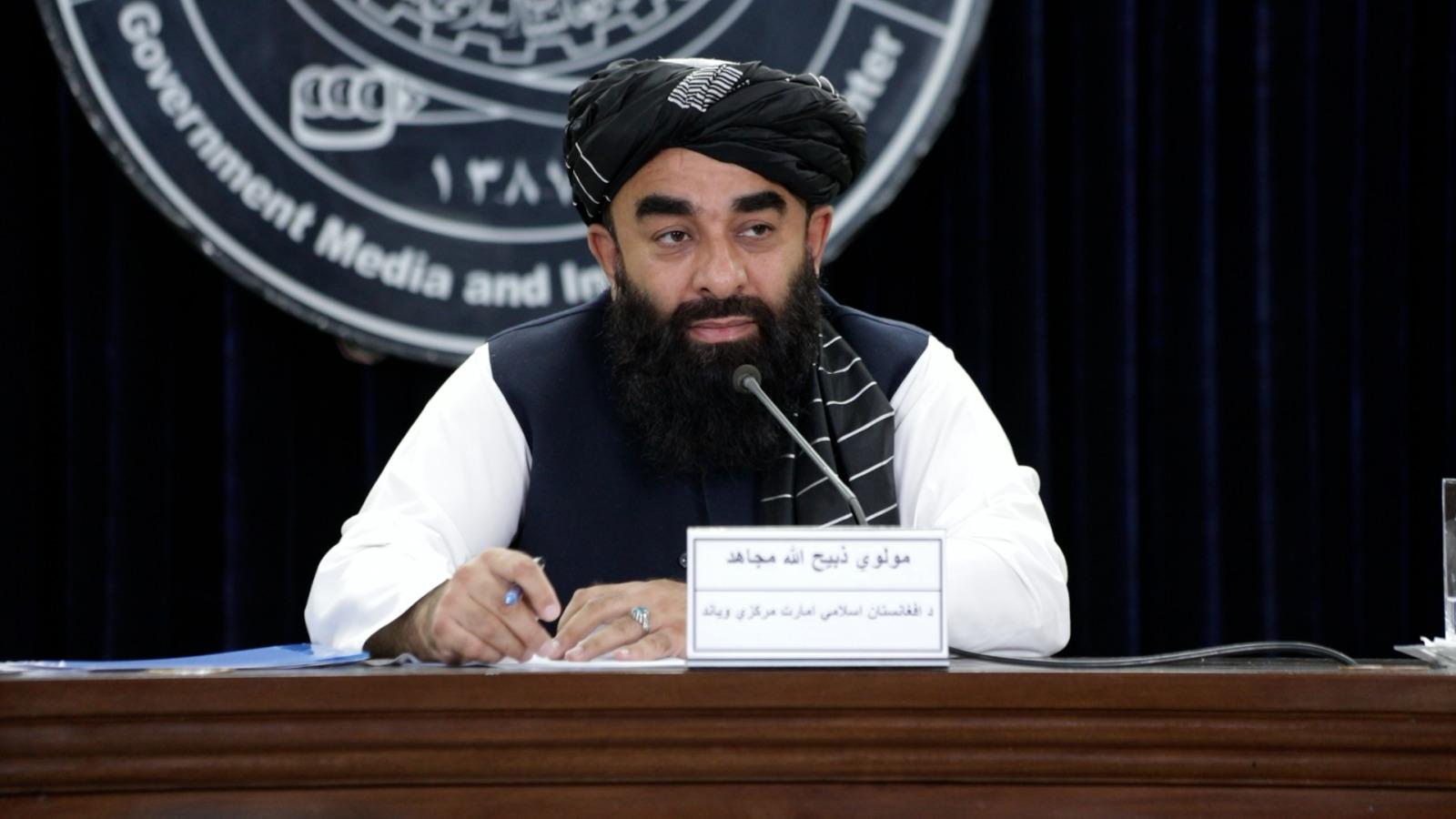
KABUL (Pajhwok): The IEA chief spokesman Zabihullah Mujahid says the Ministry of Public Health provided more than 94.8 million outpatient and inpatient services last year, while around 16 million saplings were planted, 265,000kg of expired food and low-quality materials collected, and Afghan athletes won 62 international medals.
Mujahid presented the annual activity reports of the Ministry of Public Health (MoPH), National Environmental Protection Agency (NEPA), Kabul Municipality and General Directorate of Olympic, Physical Education and Sports for the 1447 Hijri lunar year at the “Government in the Mirror of the Media” programme today.
Ministry of Public Health
Mujahid said that during 1447, a health strategy, a five-year strategic plan and a new package of health services were developed.
He said 332 guidelines, clinical protocols, legislative and regulatory documents, and standard operating procedures were also prepared for various health sectors.
He said laws concerning medicines and food, medical violations, medical conduct and ethical standards, as well as regulations for various health sectors, were drafted to standardise the health system.
According to Mujahid, roadmaps and plans were also prepared for health financing, quality and monitoring, accreditation standards for private hospitals, and obtaining international certification from the International Organization for Standardization (ISO).
He said 19,470 health cards were distributed to different categories of professionals after laboratory examinations were completed.
Mujahid said activity licences and professional cards were issued to 1,723 pharmacists, licences were granted to 346 private health facilities, registration cards were issued to 6,240 doctors, and activity licences were provided to 3,466 doctors.
He said capacity-building programmes were conducted in various fields to improve the quality of health services. A total of 10,216 health workers and officials received training in health strategy, nutrition, malaria, vaccination, surveillance and hospital management.
According to Mujahid, 98 people graduated from a two-year community psychosocial counselling programme, while 4,150 health workers were trained in various areas of mental health.
He added that 1,000 doctors, midwives, community health workers and traffic police in various provinces were trained in road safety, first aid, health services, and the prevention and control of non-communicable diseases.
Mujahid said staff from 275 private hospitals received training on accreditation and grading, while 9,000 graduates of public and private medical colleges took the 11th exit examination for professional practice licences.
60 health projects completed
Mujahid said 60 construction projects aimed at expanding health infrastructure across the country were completed and put into operation during the year.
He said the projects included 24 district hospitals, 25 health centres, one emergency services unit, one cardiac surgery unit, four intensive care units, four haemodialysis units and one specialised paediatric unit.
He added that construction and rehabilitation work had also begun on 103 health centres and hospitals across the country, including regional, provincial, maternity and district hospitals, health centres and specialised treatment facilities.
According to Mujahid, the procurement process for the construction of hospitals in 45 districts was also nearing completion.
He said a 200-bed hospital for the diagnosis and treatment of cancer had started operating in Kabul, with branches established at regional hospitals in Balkh, Herat, Nangarhar and Kandahar.
He added that the MoPH had begun completing construction and procurement work on seven unfinished health projects inherited from the previous administration, with a total value of 1.9 billion afghanis.
The projects include 100-bed hospitals in Panjshir, Daikundi and Ghazni; a 600-bed hospital in Nangarhar; a 200-bed hospital in Kunar; and 30-bed hospitals in Arghandab district of Zabul and Aqcha district of Jawzjan.
Mujahid said procurement processes worth 1.8 billion afghanis had also been completed to purchase medicines, medical and non-medical equipment, and ambulances for 71 health centres, nine provincial hospitals and eight district hospitals.
He added that Kabul’s Ahmad Shah Baba Hospital had been upgraded to specialised and tertiary levels, while CT scan, ultrasound, fluoroscopy and bronchoscopy equipment had been installed at major hospitals.
According to Mujahid, the number of tuberculosis diagnosis centres had increased to 144. Diagnostic equipment and laboratory supplies had been distributed to health centres, solar-powered refrigerators had been provided to store vaccines, and the list of approved medicines had been digitised.
Health services provided to millions
Mujahid said 92.7 million outpatient health services and more than 2.1 million inpatient services were provided during the 1447 Hijri lunar year.
He said 228,000 major and 384,000 minor surgeries, 75,000 haemodialysis and fistula services, and more than 8,000 intensive care unit (ICU) services were provided during the year.
According to Mujahid, 1.3 million births took place during the year. Around 290,000 ambulance services and more than 88,000 physiotherapy and physical rehabilitation services were also provided. Treatment was provided to more than 25,000 people with drug addiction and more than 99,000 cancer patients, while health services were provided to 30,000 pilgrims.
He added that more than 50,000 tuberculosis patients, around 23,000 malaria patients, more than 100,000 leishmaniasis patients and more than 4,000 dengue fever patients were diagnosed and treated.
Mujahid said more than 33,000 people were tested for HIV, around 33,000 for hepatitis C, more than 25,000 for hepatitis B and more than 9,000 for leprosy as part of efforts to prevent and control infectious diseases.
He said patients diagnosed with these diseases were subsequently placed under treatment.
Mujahid said more than 2.1 million children under the age of five were enrolled in nutrition programmes, while around two million mothers and children received fortified food to prevent malnutrition.
He said more than 54,000 people received information on road safety, hygiene, food safety, cancer, diabetes and heart diseases, while hundreds of thousands of posters and brochures were distributed.
He added that video clips, social media content and public awareness programmes were also produced and held on health issues. More than 567,000 people with drug addiction received awareness information on healthy lifestyles.
Mujahid said mobile health teams had also been established for prisons and support camps in all 34 provinces.
Monitoring medicines and food
Mujahid said more than 109,000 samples were assessed to ensure and regulate the quality of food, medicines and health products. Substandard products were identified and legal action was taken.
He added that technical assessments of medicines, raw materials and food products were also conducted, while licences were issued to a number of manufacturing, import and export companies and pharmacies.
According to Mujahid, more than 58,000 import permits were issued to importing companies, institutions and domestic manufacturing factories.
He said verification links had been established with 12 countries for medicine documentation, while traditional medicines were registered and assessed. A special industrial park was also approved in Kabul’s Mir Bacha Kot district to promote domestic medicine production.
Mujahid said the share of domestic production had increased to more than 30 percent, 575 cases related to pharmaceutical establishments had been legalised, and a survey and re-registration process for pharmacies had begun.
He said the accreditation and grading of 40 private hospitals in Kabul had been conducted, along with assessments of 2,178 public and private health centres.
He added that more than 5,000 medicines had been assessed, while 7,372 pharmacies, 811 importing companies, 743 wholesalers, 390 manufacturing factories and 3,380 food establishments had been inspected.
According to Mujahid, more than 3,300 industrial establishments, public and private hospitals, traditional medicine shops, herbal medicine stores, barbershops and other businesses were also inspected for compliance with hygiene and health standards.
He said 1,295 tonnes of illegal, expired and substandard medicines, health products and food items had been destroyed, while 107 cases of medical violations had been addressed.
Mujahid said 350 agreements had been signed with domestic and international institutions and organisations to expand cooperation in the health sector and improve the delivery of health services.
According to him, ministry officials and technical representatives made 17 official visits to Qatar, Türkiye, India, Iran, Indonesia, the United Arab Emirates, Bangladesh, Uzbekistan, Jordan and Saudi Arabia to expand health cooperation, control infectious diseases, build capacity, strengthen medicine regulation and registration systems, and improve quality control.
National Environmental Protection Agency
Mujahid said the NEPA assessed the environmental and social impacts of 1,771 development, industrial and production activities and projects during 1447.
He said 1,619 environmental licences were issued to project and activity owners after completion of the required legal procedures.
According to Mujahid, more than 25,000 polluting activities were monitored and inspected in Kabul and the provinces, while 7,158 recommendations were issued to bring activities into compliance with environmental standards.
He said around 16 million fruit-bearing and non-fruit-bearing saplings were planted across the country during the year.
Mujahid added that 11 cooperation agreements were signed with domestic institutions to implement environmental projects in Kabul, Bamyan, Badakhshan, Nangarhar, Faryab, Balkh and Takhar. A total of 568 training and public awareness programmes on environmental protection were also conducted at universities, madrasas and schools.
He said the draft Law on the Control and Reduction of Environmental Pollution had been finalised, while procedures for the international trade of wildlife and plants and the regulation of chemicals, as well as a policy on sustainable environmental development, had been prepared.
He added that the climate change strategy had also been finalised, environmental protection and climate change issues had been incorporated into 14 legislative and policy documents of government institutions, and 17 environmental protection guidelines had been reviewed.
Kabul Municipality
Mujahid said Kabul Municipality collected 265,496kg of expired food items and low-quality washing products from various parts of the city during the past year.
He said 185,922kg of the expired food items were destroyed.
He added that the health and environmental conditions of 29,421 businesses in Kabul’s 22 municipal districts were assessed.
According to Mujahid, 97,232 business employees received training on health and environmental issues, while 5,562 businesses were closed for failing to comply with environmental standards.
Sports
Mujahid said the General Directorate of Olympic, Physical Education and Sports held an average of 440 selection, commemorative and promotional competitions every month at the national and provincial levels during 1447, involving thousands of athletes.
He said five major leagues were held during the year, along with domestic selection competitions organised by four sports federations.
According to Mujahid, Afghanistan hosted international competitions in badminton and traditional wrestling.
He said athletes from Uzbekistan, Syria and Iran participated in the international badminton competitions, while around 60 athletes from Iran, Kyrgyzstan, Tajikistan, Uzbekistan, Turkmenistan and Türkiye took part in an international traditional wrestling festival.
Mujahid said the competitions were held in Kabul in accordance with international standards.
He added that 240 Afghan athletes participated in 32 international sporting competitions during 1447 and won a total of 62 medals.
According to him, the medals included 15 gold, 18 silver and 29 bronze.
sa