KABUL (Pajhwok): Afghanistan have called for stronger regional and global security cooperation, joint efforts to address common security threats and greater economic connectivity, while assuring that Afghan soil will not be used against others.
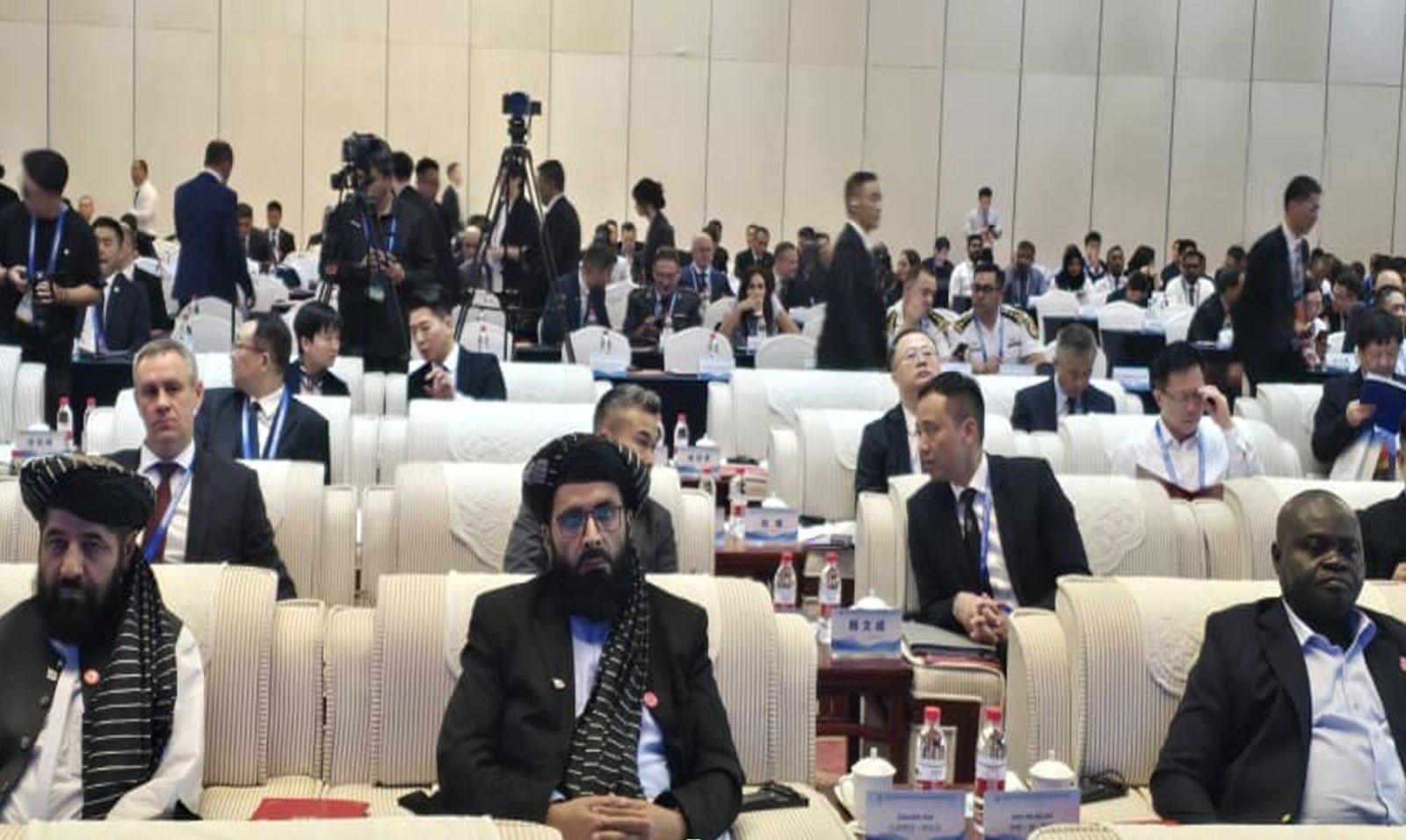
The Ministry of Interior Affairs said a high-level Afghan delegation, led by Lt. Gen. Mawlawi Zainullah Abir, director general of the ministry’s office, and Maj. Gen. Mawlawi Abdul Rahim Saqib, the ministry’s adviser, attended an international security conference in China.
Addressing the conference, Abir said the event was being held at a time when the world was facing a number of complex and interconnected security challenges.
He said wars, hostile networks, narcotics, organised crime, cyber threats, illegal migration, economic instability and competition among major powers were challenges that no country could address alone.
“In our view, security is the foundation of every nation’s development and a basic condition for economic, social and political stability. Without security, investment, trade, infrastructure development and people’s welfare face serious challenges,” he said.
Afghanistan’s security situation
Abir said Afghanistan, after decades of war and instability, was now entering a new security phase.
He said the primary objective of the Islamic Emirate’s security institutions was to protect people’s lives and property, maintain public order across the country and create a secure environment in which Afghans could build their future with confidence.
He said Afghan security forces were committed to ensuring that Afghan territory would not become a safe haven for anyone seeking to create insecurity in Afghanistan or threaten its people, neighbouring countries or other nations.
“Our security forces, with the help of Allah, are capable of preventing all forms of insecurity inside the country, suppressing those seeking to create disorder and thwarting the ill intentions of those seeking to destabilise Afghanistan. The recent failure of the disruptors in northern Badakhshan province is a clear example,” he said.
Joint efforts against insecurity
Abir said insecurity was no longer the problem of a single country but a global, borderless phenomenon.
He said effective efforts against insecurity could succeed only by strengthening intelligence sharing among countries, border security, measures to prevent illicit financial activities, the fight against drug and arms trafficking, and professional cooperation among security institutions.
“Afghanistan is among the countries that have paid one of the highest prices for the threat of insecurity worldwide. We have been victims of insecurity and do not want our country to become a centre of instability and military rivalry among international powers,” he said.
He said Afghanistan therefore supported shared responsibility, mutual respect and practical security cooperation in the fight against insecurity.
Regional security and economic connectivity
Abir said Afghanistan’s security was closely linked to regional security and that the country occupied an important geographical position connecting Central and South Asia, China, the Middle East and other regions.
He said peace and stability in Afghanistan could help strengthen trade, transit, energy cooperation and economic ties among regional countries.
“Therefore, we seek relations with regional countries based on mutual respect, non-interference, good neighbourliness and common security. We believe that the security of one country should not be ensured at the expense of another country’s insecurity,” he said.
“We firmly assure all our neighbours, regional countries and the international community that they should have no security concerns regarding Afghanistan. We are working to eliminate all factors that could expose our country, neighbours and the world to the risk of insecurity,” Abir said.
Security and economic development
He added that security and the economy were closely interconnected in today’s world.
He said security encouraged investment and trade, facilitated the implementation of major projects, created employment opportunities and reduced factors contributing to instability.
Afghanistan, he said, had significant opportunities for economic development because of its natural resources, agricultural potential, geographical position and regional connectivity.
He added that security in Afghanistan was important not only for Afghans but also for regional trade, transit and economic connectivity.
Afghanistan supports international cooperation in which security and development complement each other, he said.
Security cooperation with China
Abir said China was Afghanistan’s neighbour and an important regional country, adding that the two countries’ geographical proximity and shared security and economic interests required stronger relations based on mutual respect and common interests.
He praised China’s position in support of peace, stability, economic cooperation and Afghanistan’s development in the region, saying Afghanistan was ready to expand cooperation with China and other regional countries against insecurity, narcotics, organised crime, smuggling and other common security threats.
He stressed that security cooperation should be based on countries’ sovereignty and mutual respect rather than pressure or imposition.
Fight against narcotics
Abir said narcotics posed a serious threat to security, the economy, society and the younger generation.
He said Afghanistan had taken serious measures to eliminate narcotics, but the fight against the phenomenon could not be the sole responsibility of Afghanistan.
“Just as narcotics are dangerous for the entire world, combating them is also a responsibility shared by the international community,” he said.
Abir said the production, trafficking, financial networks and international markets linked to narcotics should all be addressed jointly to completely eliminate the problem.
He called on the international community to provide practical support to Afghanistan in alternative livelihoods, agriculture, economic opportunities and joint efforts against narcotics.
Emerging security threats
Abir said the concept of security had expanded in recent years and that security concerns were no longer limited to armed threats.
Cybercrime, misuse of information, illegal activities by financial networks, human and arms trafficking, narcotics and organised crime had also become serious threats to countries’ national security, he said.
He proposed strengthening relations among security institutions, exchanging experiences, providing professional training and establishing legal and responsible mechanisms for intelligence sharing among countries.
Afghanistan’s message
Abir said the message of the Islamic Emirate of Afghanistan was clear: Afghanistan wanted peace based on mutual respect, security that constituted a shared interest for all countries in the region, and economic development founded on security, stability and mutual interests.
He said Afghanistan sought relations with the international community that took into account the country’s sovereignty, independence, national interests and the legitimate demands of the Afghan people.
The current security crises in the world showed that no country could address all of today’s security threats alone, he said.
According to Abir, countries should move from confrontation to cooperation, from mistrust to trust, and from unilateral security calculations towards collective security.
He said Afghanistan, after its long experience of war, understood the importance of peace and stability and supported regional and global security based on mutual respect, shared responsibility and common interests.
Abir expressed hope that discussions at the conference would not remain limited to the meeting but would translate into practical measures for security cooperation among countries, confidence-building and lasting stability.
sa