
KABUL (Pajhwok): Deputy Prime Minister for Economic Affairs Mullah Abdul Ghani Baradar says the Islamic Emirate of Afghanistan (IEA) is working to complete unfinished economic projects while also pursuing infrastructure development, regional connectivity and trade expansion.
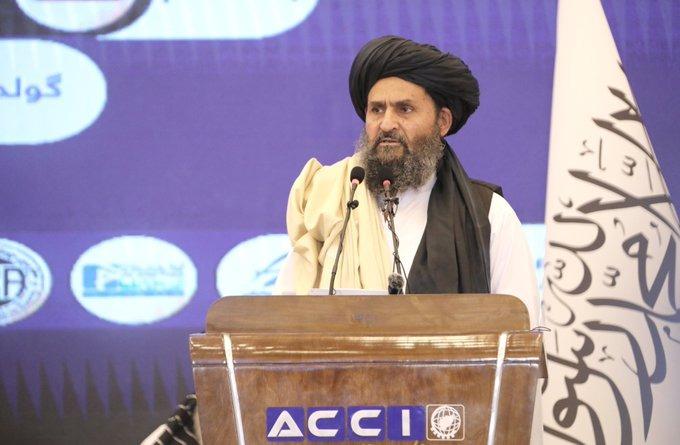
He made the remarks at the opening of the Imam Abu Hanifa (RA) International Exhibition, which opened today (Wednesday) at the Afghanistan International Exhibition Centre in Kabul and will run for seven days.
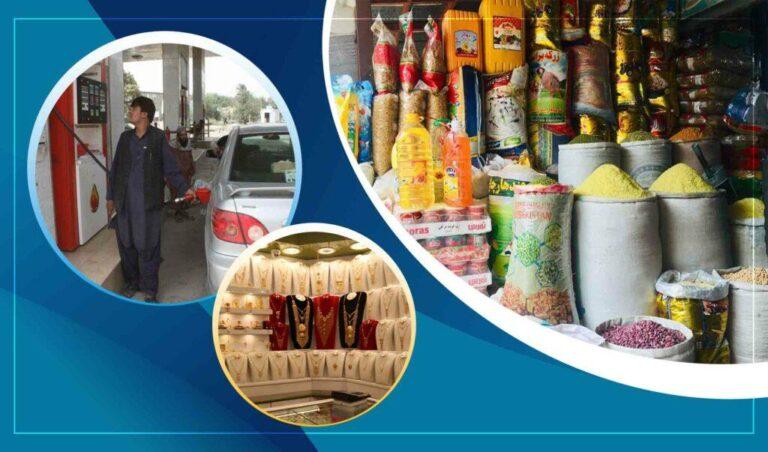
Hundreds of domestic companies are showcasing industrial and agricultural products at around 600 stalls at the 5th general and international Imam Abu Hanifa (RA) Exhibition. The products on display include food items, medicines, dairy products, construction materials, handicrafts, carpets, plastics, iron smelting and various other products.
Addressing the opening ceremony, Baradar explained that the IEA was working to provide necessary facilities for trade and investment, reduce obstacles facing traders and create a suitable environment for the private sector, as private-sector participation was of fundamental importance to economic growth.
He described the Wakhan economic and trade route as an example of such efforts, stressing that Afghanistan wanted to turn its borders from points of threat into points of connectivity for economic partnerships and find regional and international markets for domestic products.
He added that the exhibition was an important initiative to showcase Afghanistan’s economic potential, support domestic products, expand trade relations and strengthen direct trade ties between Afghanistan and the region.
He noted that the exhibition would properly showcase Afghanistan’s potential in trade and production and, given the high quality of the country’s manufactured, agricultural and industrial products, as well as dried and fresh fruits, would play an important role in strengthening trade relations with other countries and finding regional and international markets for Afghan products.
Baradar pointed out: “Trade relations among the countries of the region and the world are based on an important principle of trade, namely comparative and absolute advantages, so that countries can properly meet their respective needs in different areas of production, industry and technology through these means.”
He explained that no country is considered less important in regional and international trade because every country has either comparative or absolute advantages in the production of goods and products. He described this as a fundamental requirement and driving force of regional and international trade.
He stressed that the IEA was not only completing unfinished chapters in economic growth and development but had also, despite limited resources, launched new chapters in developing the country’s economic foundations that “future generations will be proud of”.
The Wakhan economic and trade route had been opened, he noted, adding that the road would connect China with European markets through Afghanistan via the shortest route and turn Afghanistan into a busy hub for regional transit and trade. In addition to transit revenues, major and important infrastructure would gradually be developed along the route, he added.
Baradar emphasised that the IEA’s efforts to promote regional connectivity showed that it wanted to turn the country’s borders from points of threat into points of connectivity for strategic economic partnerships, adding that this was one of the government’s key priorities.
kk