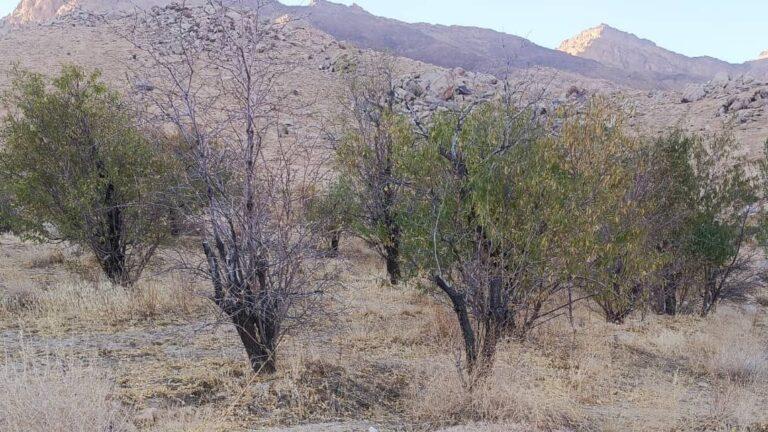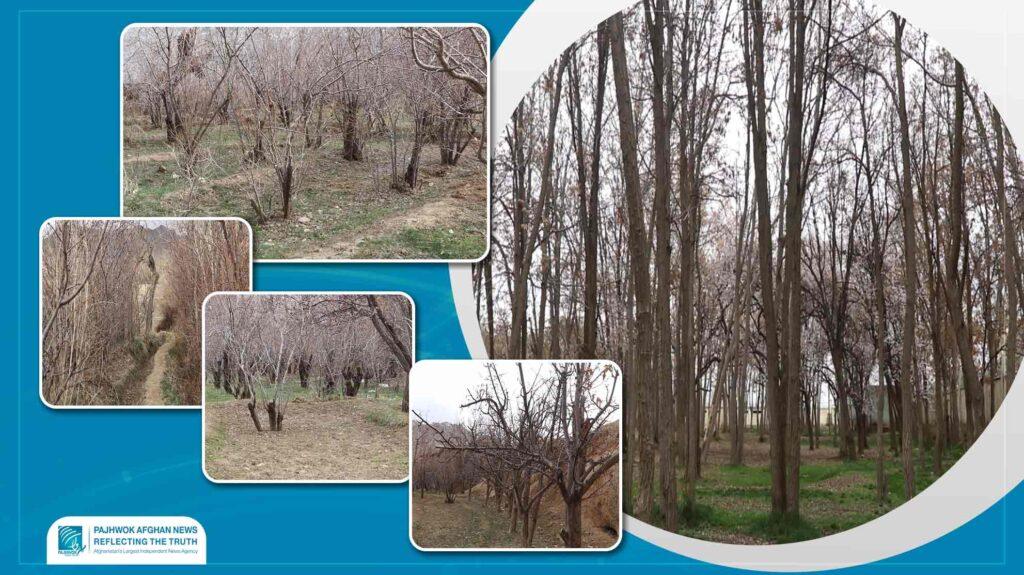

GHAZNI CITY (Pajhwok): Some farmers in southern Ghazni have expressed concern over declining orchard yields due to climate change, calling on relevant authorities to provide drought-resistant saplings, improved seeds and support to control plant diseases.
According to the farmers, drought, irregular rainfall and an increase in plant pests have significantly affected their orchards and farmland in recent years.
Abdul Rahman, an orchard owner from Jamrad area of Qarabagh district, told Pajhwok Afghan News that traditional saplings used to produce good yields, but changing climatic conditions have reduced their resilience.
“Our demand is that we should be provided with drought-resistant and improved saplings,” he said.
Another farmer from Khogyani district, Mohammad Yousuf, said: “If we are given quality saplings and seeds, we can increase our yields. Currently, many plants either dry up or fail to bear proper fruit.”
Meanwhile, some farmers in Khwaja Omari district said plant diseases and pests have increased due to climate change.
Gul Ahmad, an orchard owner, said: “Continuous droughts followed by heavy rains weaken tree roots, making them more vulnerable to diseases. In the past, there were fewer pests, but now new diseases emerge every year. Without professional support, our orchards may face serious damage.”
Agriculture expert Ali Sina noted that climate change has not only affected water resources but also altered plant growth cycles, contributing to the spread of pests.
“If farmers are not provided with climate-adapted saplings, scientific guidance and modern pest control methods, the agriculture sector will face further challenges,” he said.
He emphasised that proper water management, promotion of modern agriculture and professional training for farmers could play a key role in addressing these issues.
Zakirya Hotak, spokesman for the Ghazni Department of Agriculture, Irrigation and Livestock, said the authorities were aware of farmers’ concerns and were working to distribute around 250,000 fruit-bearing and non-fruit-bearing saplings this year in cooperation with partner organisations.
He said the saplings had been grown in local nurseries and were adapted to Ghazni’s climate, offering better resistance to drought and pests.
According to him, the department also has specific programmes aimed at water management, raising farmers’ awareness and promoting modern agricultural practices.
Nearly 80 per cent of Ghazni’s population—out of around two million people—is engaged in agriculture and livestock, and the impacts of climate change are increasingly affecting their livelihoods.
hz/sa