
SHIBERGHAN (Pajhwok): While a charity has launched a safe drinking water distribution programme in remote villages of northern Jawzjan province, residents of some of these areas say successive droughts have left their well water salty and unfit for use. They have called for the programme to be expanded and continued.
Climate change and successive droughts in recent years have caused water shortages in many countries around the world, including Afghanistan and Jawzjan province.
A number of Jawzjan residents, including farmers, have long complained about water shortages, saying that in some remote villages of the province, falling groundwater levels have made well water salty and unsuitable for drinking.
The Madaniyat Charity Foundation has been distributing safe drinking water in remote villages of Shiberghan, the provincial capital and in some districts of the province for the past two months.
Salty water problem in Qala-i-Chaghchi village
Qala-i-Chaghchi village in Shiberghan, home to dozens of families, is facing a shortage of safe drinking water. Cracked, dry land and withered trees are signs of the severe water shortage in the area.
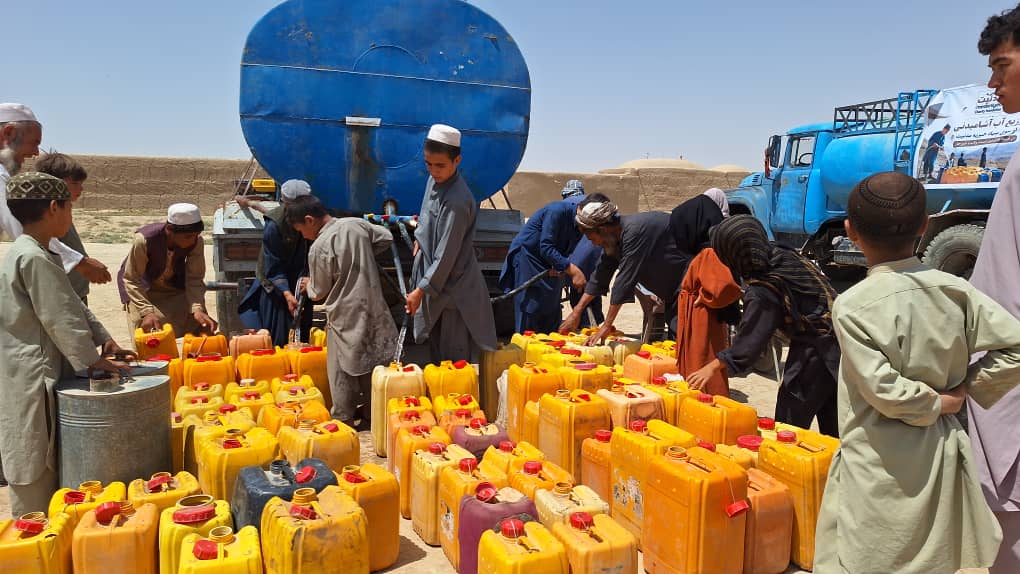
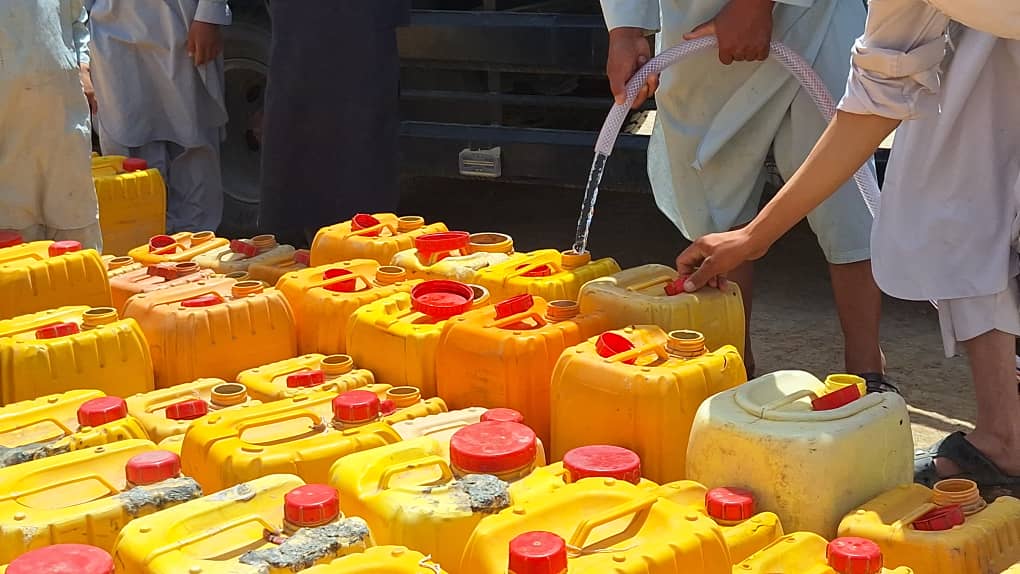
On a hot summer day, a water tanker arrives in the village to distribute water to residents. As soon as they hear it, children, adults and young people come out of their homes carrying yellow containers and queue up to collect drinking water. They say the water available in their village is salty and unfit for use.
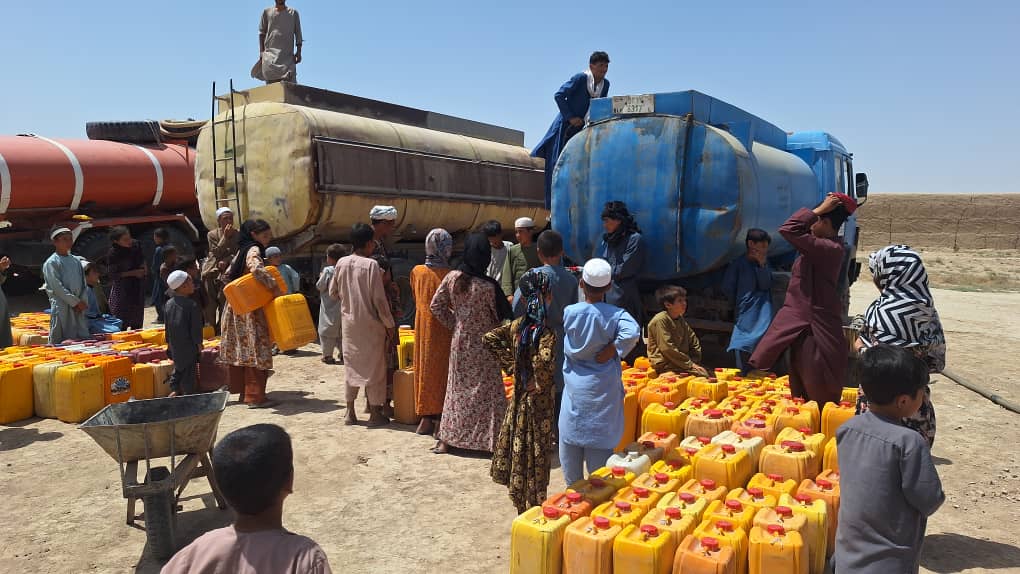
Abdullah, a resident of the village, told Pajhwok Afghan News that groundwater levels in the area had fallen sharply in recent years, many wells had dried up and the remaining wells produced salty water that was unsuitable not only for drinking but even for washing clothes.
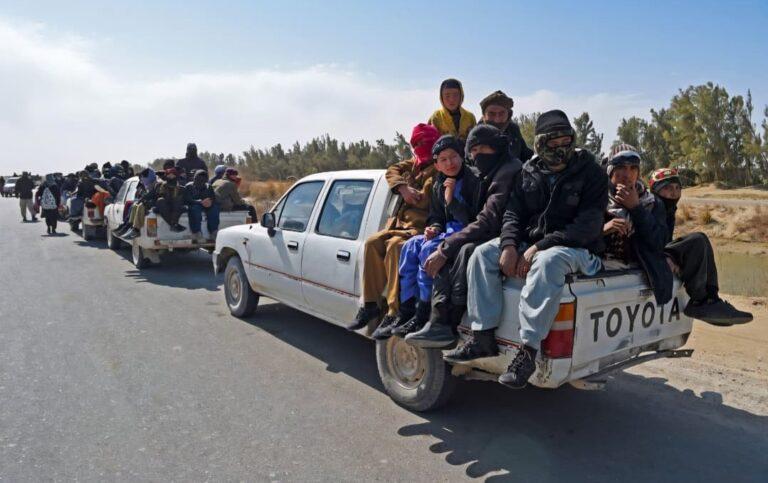
He said: “During winter, we use rainwater to some extent, but in summer we face a severe water shortage. Many families have had to travel long distances to obtain drinking water or use unsafe water, increasing the risk of various diseases and many families have fallen ill.”
Thanking the charity for its drinking water distribution programme, he added: “Even if wells are dug in this village, the water is salty and people cannot use it for drinking.”
Meanwhile, another resident, Allah Murad, said people in the area had faced a shortage of safe drinking water for years, with many families forced to walk several kilometres every day to collect enough water for drinking.
He added: “Most of the water we obtain is either salty or unsafe, and using it causes many health problems, particularly for children and the elderly. We also cannot afford to buy safe drinking water every day.”
Referring to the water distributed by tankers from the Madaniyat Charity Foundation in the village, he said: “Since the Madaniyat Charity Foundation started distributing safe drinking water, the situation has improved considerably. People are very happy and our children are now falling ill less often.”
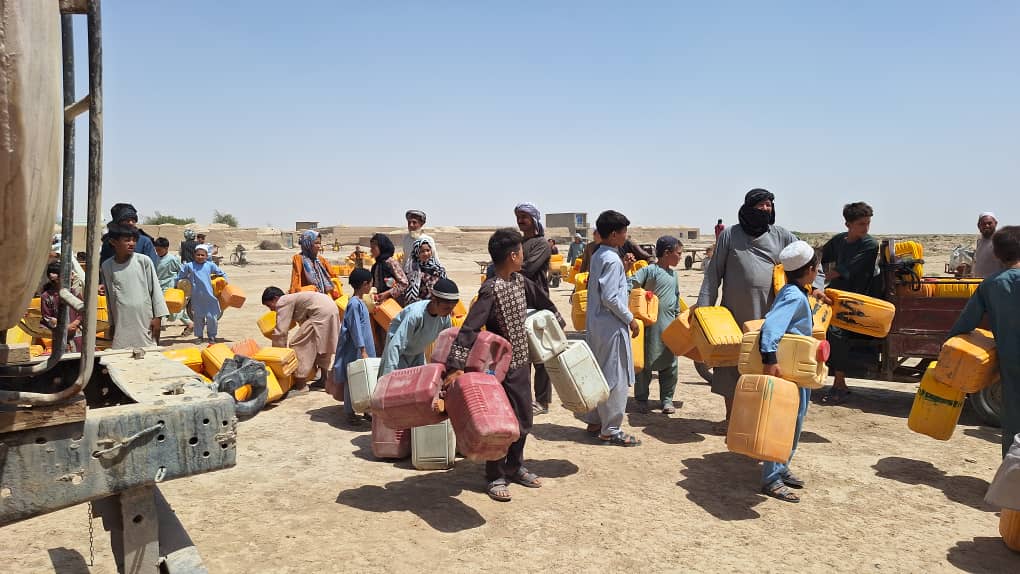
He called on the foundation’s officials and other aid organisations to expand such programmes so that people would no longer face shortages of safe drinking water.
Madaniyat Charity Foundation: Water distributed to 4,000 families
Mahmood Rasouli, a representative of the Madaniyat Charity Foundation, told Pajhwok that the organisation launched its water tanker distribution programme two months ago to help address water shortages in remote villages of Shiberghan and several districts of Jawzjan.
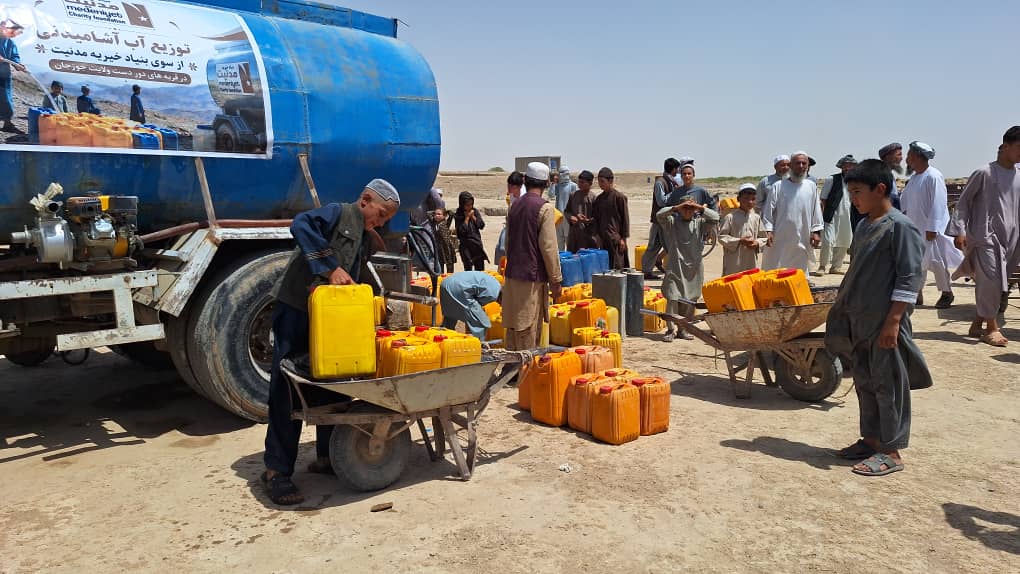
He said the foundation’s teams travelled daily to villages in Aqcha, Khwaja Du Koh, Qush Tepa and Shiberghan, where residents faced problems with salty water, and distributed safe drinking water.
Rasouli added that water distribution in needy areas was continuing and efforts were under way to bring more families under the programme.
He said: “Our goal is to provide deprived families with access to safe drinking water. In many remote areas, available water sources are salty and unsuitable for drinking. That is why we launched the distribution of safe drinking water as an immediate solution.”
According to Rasouli, the programme has significantly reduced people’s difficulties in accessing safe drinking water, while the use of clean water has also lowered the risk of diseases caused by contaminated water.
He said safe drinking water had been distributed to 4,000 families since the programme began and that the initiative was continuing.
kk