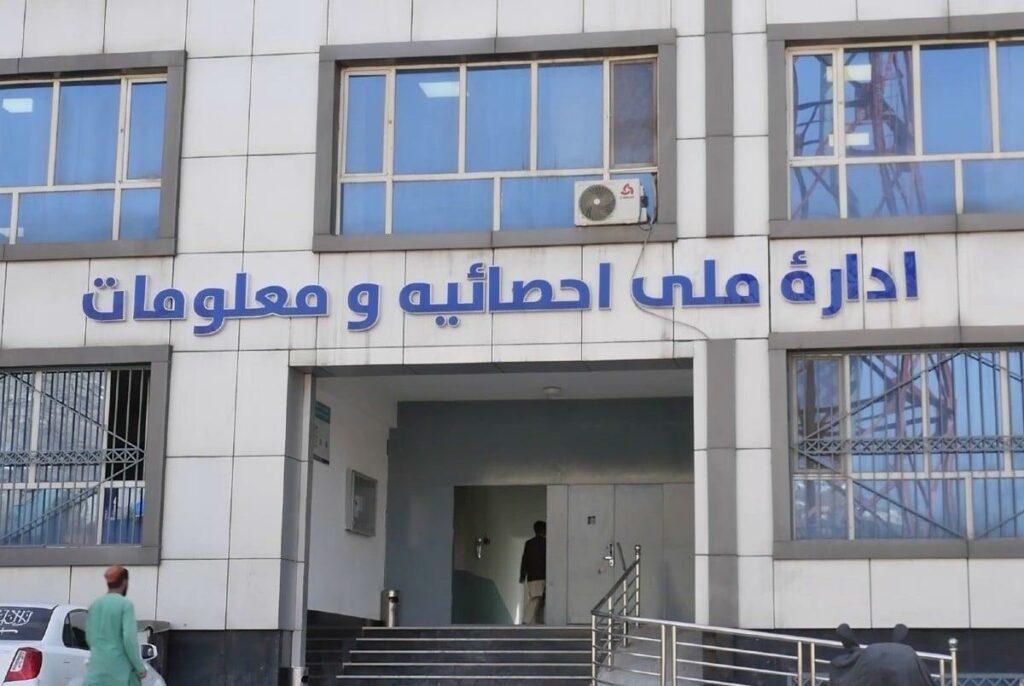
KABUL (Pajhwok): The National Statistics and Information Authority (NSIA) says Afghanistan’s road network has been assessed for the first time, with its total length estimated at 245,072 kilometres.
The NSIA said in a statement today that its Geographic Information Coordination and Analysis Department had conducted the first-ever assessment of Afghanistan’s road network, determining its total length at 245,072 kilometres.
According to the authority, an assessment and analysis by its Directorate-General of Geographic Information found that 18,241 kilometres (7.4 percent) of the country’s total road network are paved, while 226,831 kilometres (92.6 percent) are unpaved.
The statement said the assessment was conducted to provide a comprehensive and unified picture of Afghanistan’s road network.
The authority said information on the road network was collected and analysed from various sources, including the Ministry of Public Works, the Ministry of Rural Rehabilitation and Development, the OpenStreetMap (OSM) global data platform and satellite imagery through remote sensing.
The findings show that a large portion of the country’s road network remains unpaved, while significant differences exist among provinces in terms of the amount and share of paved roads.
According to the assessment, Kabul has the largest paved road network among the provinces, with 4,084 kilometres, while Nuristan has the smallest, with only 12 kilometres of paved roads.
In terms of the share of paved roads in the total road network of each province, Kapisa ranks highest, with paved roads accounting for 25.1 percent.
Daikundi and Ghor have the lowest share, with only 0.5 percent of their road networks paved.
The assessment also identified 4,747 large and small bridges, 8,681 culverts and 854 flood-crossing points across the country.
In addition, the authority identified 16 damaged bridges and 249 locations where bridges are needed across the country’s road network.
The accessibility of rural populations to the road network was also assessed. Based on a two-kilometre distance criterion, around 41 percent of the rural population has access to paved roads, 63 percent to main roads and 96 percent to the overall road network.
The NSIA said the assessment also highlighted significant differences in road accessibility among provinces and could be used to identify areas where transport infrastructure needs to be developed and improved.
sa