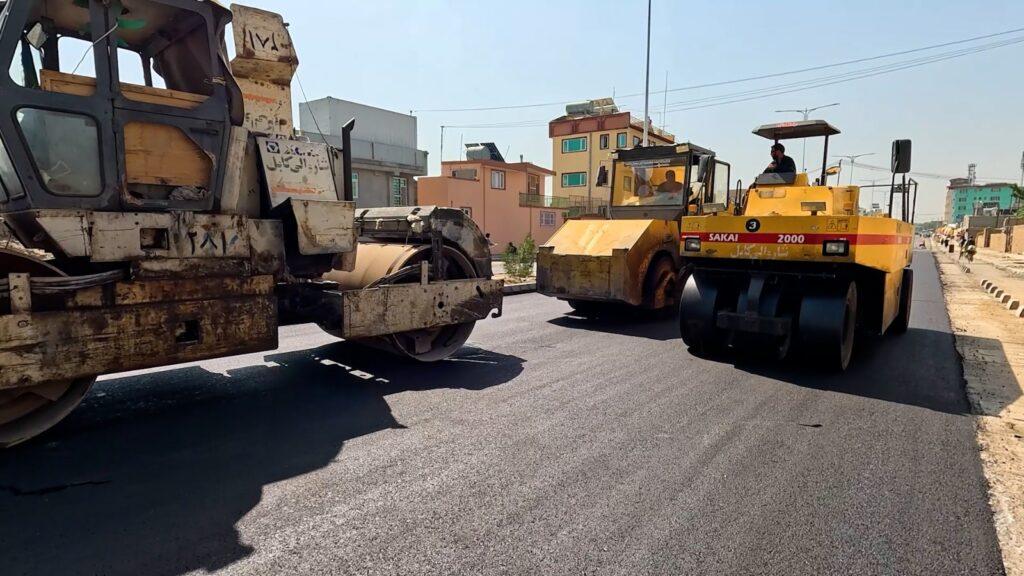

KABUL (Pajhwok): Kabul Municipality says it has built 500 kilometres of main and secondary roads and rehabilitated another 400 kilometres over the past five years. Work is currently underway on 166 roads, while 10,000 properties have been acquired for the implementation of various projects.
On August 15, 2021, the Islamic Emirate of Afghanistan (IEA) gain control of Afghanistan, completing five years in power.
During this period, Kabul Municipality has implemented various projects aimed at developing the capital.
500km of new roads built in five years
Nematullah Barakzai, cultural adviser and spokesman for Kabul Municipality, told Pajhwok Afghan News that the municipality had built 500 kilometres of roads in various parts of Kabul over the past five years in accordance with the city’s master plan.
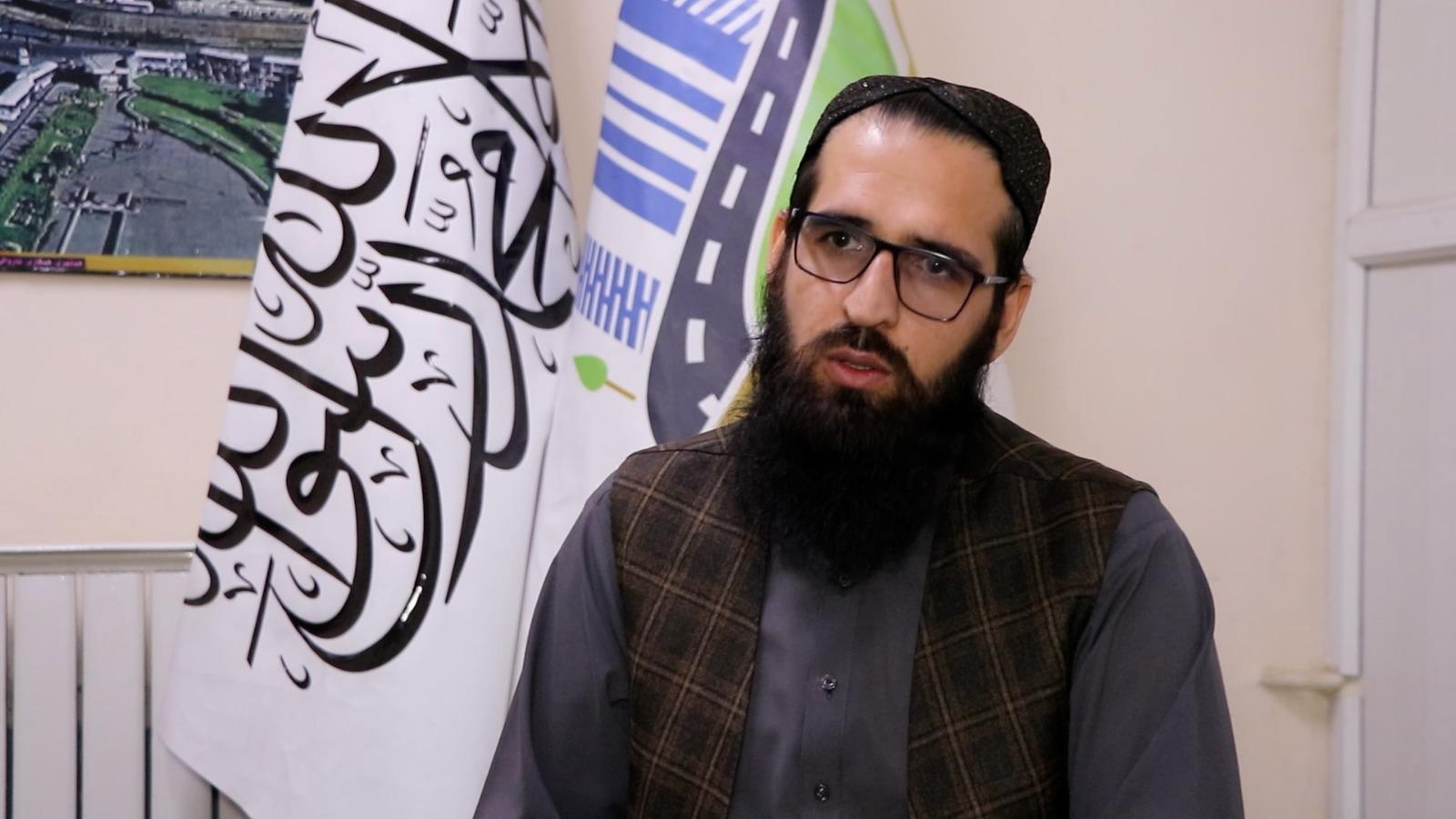
He said: “All 500 kilometres are new roads, including main and secondary roads. There are roads 60 metres wide, 30 metres wide and 20 metres wide. All have been built in accordance with the master plan.”
Barakzai, without providing details, said work was currently underway on 166 roads in solar year 1405 [2026].
Major road projects underway
The Kabul Municipality spokesman said the municipality was also constructing and expanding sections of several major roads within Kabul that extend from the capital towards other provinces.
According to him, one of these projects is the Khairkhana road, which consists of three main sections. Work on two sections has been completed, while the third is expected to be completed by the end of this year.
He said the first section of the road extending from Kabul’s Minar-i-Jam towards Logar, up to the Surkhab area, is about seven kilometres long and is expected to be completed by the end of this year. Work on the second section has also begun and is expected to be completed in about 15 months.
Barakzai said work was also underway on two sections of the road from Makroyan towards Jalalabad. The first section, stretching 9.3 kilometres from Makroyan Square to Paktiakot, has a construction cost of 680 million afghanis and is expected to be completed by the end of this year.
He added that the second section, from Paktiakot to Tang-i-Gharo, is about 10 kilometres long. Construction work has begun on the section and is expected to cost 1.021 billion afghanis.
Around 400km of roads rehabilitated
Nematullah Barakzai said around 400 kilometres of roads in various parts of Kabul had been rehabilitated over the past five years.
He said the municipality had a system under which road maintenance begins immediately after construction.
“If I give you the figures by kilometres, 94 kilometres were maintained this year alone, and we also rehabilitated 94 kilometres last year. Overall, we have rehabilitated around 400 kilometres of roads that we had previously constructed,” he said.
Seven flyovers planned in Kabul
The Kabul Municipality spokesman said the construction of seven flyovers was planned in Kabul, with the Barki flyover being the largest and most expensive project.
According to him, the Barki flyover will cost 1.5 billion afghanis and consists of two sections.
He said work on the underpass in the first section was 90 percent complete. The section is 470 metres long, while the second section of the Barki flyover is 700 metres long and has 440 pillars. Around 50 percent of work on the second section has been completed so far.
Barakzai said the Barki flyover is a two-year project that began last year and is expected to be completed in 1406 [2027].
He said the second major flyover currently under construction is the Salang Road flyover. Work on the project began in 1404 [2025] and is scheduled for completion in 1406 [2027].
According to him, the Salang Road flyover is 235 metres long and will cost 462 million afghanis.
He added that the Minar-i-Nijat flyover was another planned project. Although physical construction has not officially started, preliminary work has been completed.
He said the design of the Shaheed Square flyover had been completed and land acquisition was underway, with construction expected to begin soon.
Barakzai said three other flyovers were planned at Kabul Airport Square, the Third Makroyan Square and the Company area. Their designs were being prepared and construction would begin after the designs were completed.
More than 20 billion afghanis allocated for development
The Kabul Municipality cultural adviser said the municipality had allocated more than 20 billion afghanis for various development projects over the past five years, with a large portion spent on infrastructure projects, particularly road construction.
He said Kabul Municipality’s entire budget was generated from its own domestic revenues and that it had not received even one afghani from the Ministry of Finance.
Barakzai added that balanced development was being considered in the implementation of roads and other projects, and that Kabul Municipality was seeking to implement projects and provide balanced services in all districts of the city.
Four project contracts cancelled over quality concerns
Barakzai said the municipality had so far cancelled the contracts of four projects because of violations by contractors and work carried out contrary to approved designs.
He said the first section of the Gulbagh road was among the projects whose contract was cancelled after the contractor carried out work contrary to the design.
He added that companies whose contracts were cancelled by Kabul Municipality would be blacklisted and would no longer be allowed to work on municipality projects.
10,000 properties acquired
Barakzai said a total of 10,000 properties had been acquired over the past five years, adding that more than half of the owners had received their compensation, amounting to more than five billion afghanis.
He said some of the acquired properties involved complicated inheritance cases, such as situations where a father had died, with some heirs living in Afghanistan and others abroad.
“In such cases, Kabul Municipality deposits their compensation in a trust account. Once they resolve their legal issues, they can collect their money from Kabul Municipality,” he said.
He said the municipality’s main objective was to ensure that no street or road in Kabul remained unpaved.
According to Barakzai, given the municipality’s budget, it could take five to 10 years to achieve this goal, but the municipality was working to ensure that all residents had balanced access to basic services.
What do Kabul residents say about the municipality’s activities?
Weisuddin, a resident of Kabul’s Barki area, said Kabul Municipality had carried out significant work in various sectors over the past five years, particularly in road construction and expansion.
He said new roads had been built in some areas and existing roads widened in others, making it easier for residents to travel.
Weisuddin expressed hope that reconstruction and development projects would continue across the country to pave the way for further development.
Javad, a resident of Kabul’s Yakhtot area, said the lack of roads had previously caused difficulties for residents, but the construction of a new road from Qabil Bai area to Maidan Airport Square about two years ago had eased their transportation problems.
He praised the municipality’s initiative, saying the new road had resolved many problems for residents of the area.
Aminullah Mohammadi, a resident of the Hotkhail area in Kabul’s 9th district, also praised the municipality’s efforts on roads but said work on the Kabul-Jalalabad road in the area was progressing very slowly.
He said the area was dusty and residents were facing many problems.
“Kabul Municipality does not pay attention to this road. They work here one day and somewhere else the next. They do half the work in one place and leave it unfinished. Sometimes they block one section without working on it, and sometimes they block another section,” he said.
He called on the municipality to speed up work on the road.
Expert: Municipality’s activities positive, but metro and electric buses also needed
Economic affairs analyst Mishal Stanikzai described the construction of 500 kilometres of roads and rehabilitation of around 400 kilometres over the past five years as a positive development. However, he said Kabul’s population and number of vehicles had increased significantly, making further investment in roads necessary.
He said 25 percent of the city’s urban area should be allocated to transport infrastructure.
Stanikzai also welcomed the municipality’s plan to build seven flyovers, saying they could help reduce traffic congestion in the short term but would not be sufficient to address Kabul’s transport problems in the long term.
He said: “It would be better to work on metro systems and electric buses alongside the flyovers. We call on Kabul Municipality to have a plan in this area so that Kabul can become a modern city.”
Regarding the cancellation of four contracts, Stanikzai said some contractors had previously faced problems with the quality of their work, but greater attention was now being paid to project quality.
He said cancelling the contracts of contractors that failed to meet required quality standards and blacklisting them might create pressure on construction and road projects in the short term, but would have a positive impact in the long term.
According to Stanikzai, companies that were not committed to quality and failed to properly fulfil their responsibilities concerning public assets should be blacklisted and prevented from implementing future projects.
“This should serve as a lesson to other companies so they work with better quality,” he said.
He also called for fair treatment in the acquisition of properties, saying Kabul Municipality should compensate owners with suitable alternatives or payments based on the actual value of their private properties.
Kabul Municipality spokesman Nematullah Barakzai said property acquisition was carried out in accordance with regulations and that owners were compensated for both their houses and land.
He said compensation rates were determined according to the relevant regulations, with separate payments made for buildings and land based on the same rules.
He added that the municipality did not have the authority to increase or decrease the officially determined compensation rates.
sa