Language

UN experts ask Taliban to immediately halt public floggings
KABUL (Pajhwok): UN experts have called on the Taliban to immediately stop public floggings and all forms of torturous, cruel and degrading forms of punishments.

In a joint statement issued on Friday, the experts said: “Since  November 18, 2022, the de facto authorities have reportedly carried out floggings of over 100 individuals, both women and men, in several provinces including Takhar, Logar, Laghman, Parwan and Kabul.”

They said each person was given between 20 and 100 lashes for alleged crimes including theft, ‘illegitimate’ relationships or violating social behaviour codes.

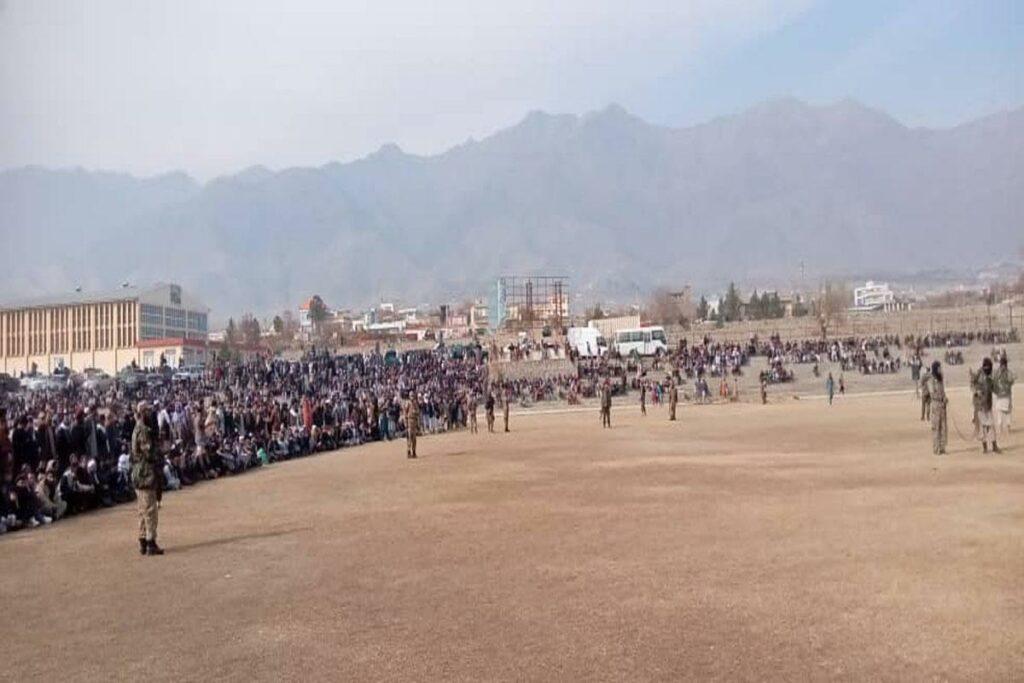
The flogging has been carried out in stadiums in the presence of officials and members of the public.

On December 7, 2022, the Taliban publicly executed a man in Farah city, for killing another man, in what appears to be the first public execution since seizing power in August 2021.

The UN experts said public floggings and executions violate universal principles prohibiting torture and other cruel, inhuman or degrading treatment or punishment.

“Afghanistan is a state party to the International Covenant on Civil and Political Rights and the Convention against Torture and Other Cruel, Inhuman or Degrading Treatment or Punishment, which prohibits torture, or other cruel, inhuman or degrading punishment. The public spectacle of these punishments make them especially distasteful and undignified.”

The experts raised doubts about the fairness of the trials preceding these punishments, which appear not to satisfy basic fair trial guarantees.

“International human rights law prohibits the implementation of such cruel sentences, especially the death penalty, following trials that apparently do not offer the required fair trial guarantees”.

“We call on the de facto authorities to immediately establish a moratorium on the death penalty, prohibit flogging and other physical punishments that constitute torture, or other cruel, inhuman or degrading treatment or punishment and guarantee a fair trial and due process in accordance with international standards. At all times, no matter the status of a person, they are entitled to dignity and respect.”

The experts included Richard Bennett, Special Rapporteur on the situation of human rights in Afghanistan; Reem Alsalem, Special Rapporteur on violence against women and girls, its causes and consequences, Fionnuala Ní Aoláin, Special Rapporteur on the promotion and protection of human rights and fundamental freedoms while countering terrorism; Dorothy Estrada Tanck (Chair), Ivana Radačić (Vice-Chair), Elizabeth Broderick, Meskerem Geset Techane and Melissa Upreti, Working Group on discrimination against women and girls; Alice Jill Edwards, Special Rapporteur on Torture and Other Cruel, Inhuman or Degrading Treatment or Punishment; Morris Tidball-Binz, Special Rapporteur on extrajudicial, summary or arbitrary executions.

ma

Related Topics