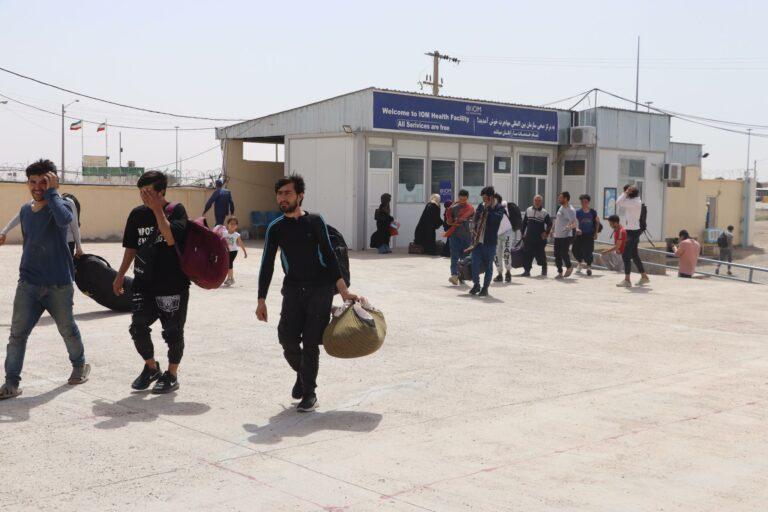

Kabul (Pajhwok): Amnesty International has called on the European Union’s Commissioner for Home Affairs and the interior ministers of EU member states to suspend plans to deport Afghan migrants to Afghanistan and to end any cooperation with the Islamic Emirate regarding their readmission.
In an open letter, the organization stated that on 23 June 2026, a delegation of officials from the Islamic Emirate traveled to Brussels for the first time, where they held discussions with representatives of the European Commission and officials from 15 EU member states on technical cooperation related to the return and readmission of Afghan migrants.
Amnesty International said the meeting followed an invitation from the European Commission, visits by European Commission officials to Kabul in January 2026, and a request from 19 EU member states and Norway to accelerate the return process for Afghan migrants.
The rights group expressed concern that the EU and its member states are continuing efforts to establish mechanisms for cooperation on deportations despite extensive reports from the United Nations, Amnesty International, and other human rights organizations highlighting serious risks in Afghanistan.
The organization said that since the Islamic Emirate returned to power in August 2021, legal protections for fundamental rights have been severely weakened, and violations of current authorities’ regulations may result in punishment.
Amnesty International also pointed to Afghanistan’s ongoing humanitarian crisis, stating that nearly 22 million people are in need of humanitarian assistance, making it one of the world’s largest humanitarian crises.
The letter noted that more than 5.4 million Afghans who have returned to the country since October 2023continue to face significant challenges, including limited access to shelter, employment, healthcare, and other essential services.
The organization warned that the resumption of forced deportations could expose Afghan migrants to serious human rights violations and place deporting countries at risk of breaching their international obligations, particularly the principle of non-refoulement, which prohibits returning individuals to places where they may face persecution or serious harm.
Amnesty International also criticized the European Commission’s plan to prioritize the deportation of individuals convicted of serious crimes or considered security threats.
It argued that under international law, the principle of non-refoulement is absolute and that a person’s criminal record cannot be used as a justification to override this protection.
The organization concluded by urging the European Union and its member states to stop efforts to cooperate with the Islamic Emirate on the readmission of Afghan migrants and to refrain from resuming forced deportations.
sa