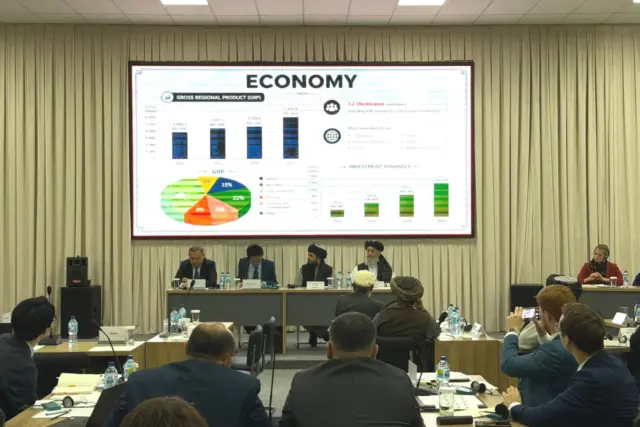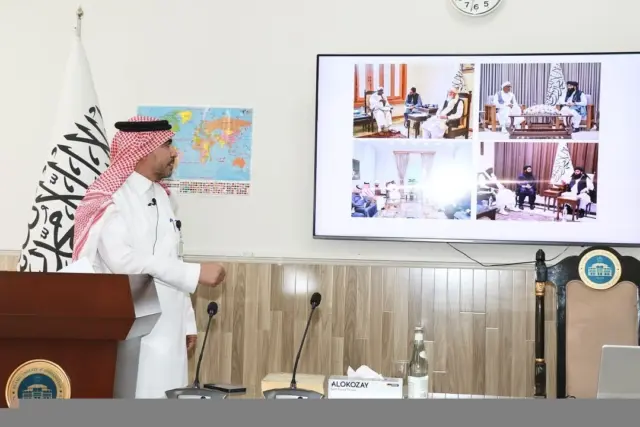
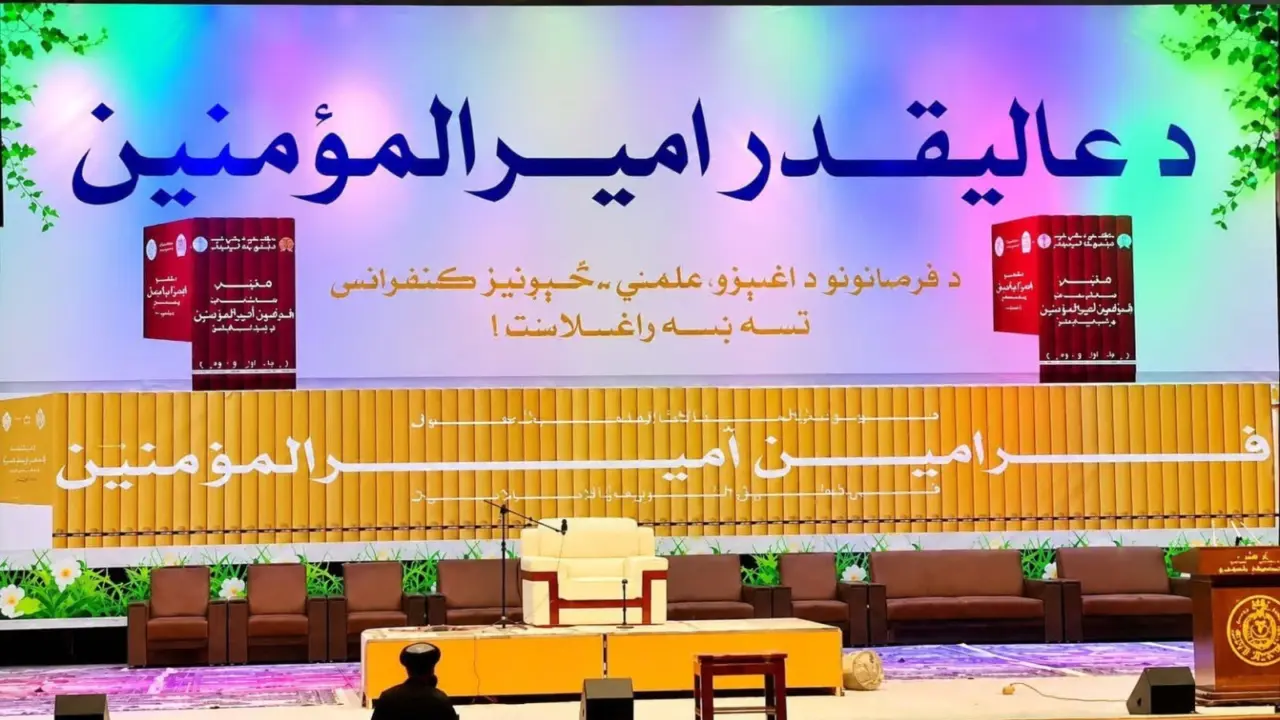
KABUL (Pajhwok): A four-day academic conference on the Sharia, social, political, economic and cultural impacts of decrees issued by the Islamic Emirate of Afghanistan (IEA) leadership began in Kabul on Monday, with senior officials stressing the need to strengthen the system and enforce Islamic rulings.
The conference, organised by Wardak University under the Ministry of Higher Education, is being held at Kabul University under the title “The Impacts of Islamic Emirate Leadership Decrees: From Islamic Leadership to Sharia, Social, Political, Economic and Cultural Developments”.
More than 1,000 scholars, university lecturers, researchers and IEA officials are attending the event.
Supreme Court Chief Justice Mawlawi Abdul Hakim Haqqani, speaking at the opening ceremony, said the establishment of the Islamic system had freed Afghans from many difficulties and united them under one leader after 50 years, despite their regional, linguistic and ethnic differences.
He said the system had been established through sacrifices and divine support, not at the request or direction of any council, organisation or other institution.
Haqqani said the system would face difficulties if it were governed by laws other than divine commandments. He described security as its most important achievement and a major blessing from Allah.
Deputy Prime Minister for Administrative Affairs Mawlawi Abdul Salam Hanafi said regional and linguistic divisions had disappeared since the Islamic Emirate came to power.
He described the establishment of the system as the result of the sacrifices of martyrs, saying divine laws were now being enforced.
Hanafi said the former IEA leader Mullah Mohammad Omar Mujahid had launched an uprising against corruption and brutality, with the aim of establishing an Islamic system.
He also said that after the takeover, Mujahideen had detained people who had killed 120 of their comrades but had refrained from punishing them in accordance with an amnesty granted by the Islamic Emirate’s supreme leader.
Interior Minister Sirajuddin Haqqani said the country had witnessed the establishment of what he described as a pure system after a prolonged period.
He said consolidating and implementing the Islamic system was a major responsibility following the jihad period, adding that fulfilling this responsibility was more difficult than the 20-year struggle.
Haqqani stressed that the foundations of the system should be based on Sharia principles to ensure further progress.
Justice Minister Sheikh Abdul Hakim Sharaei said no prophet had been sent to Earth without a law and that no system could exist without laws.
“Praise be to Allah, we have both law and a system,” he said.
He described the research papers submitted to the conference as a major academic contribution to future generations, adding that the Holy Quran was the country’s constitution and that man-made laws were contrary to Islam.
Maidan Wardak Governor Mawlawi Khairullah Khairkhwa praised Wardak University for organising the conference and called for effective use of available opportunities to strengthen the Islamic system.
He urged collective efforts to address threats and challenges facing the system and called on religious scholars to support what he described as the truth and promote brotherhood.
Khairkhwa described Afghanistan as the only country where an Islamic system was in power, urging officials to make the most of the opportunity to ensure its long-term survival.
Wardak University Chancellor Sheikh Mohammad Abid Haqqani said 1,876 academic papers had been submitted to the conference, of which around 1,000 were accepted after evaluation. The accepted papers had been published in 75 volumes, with their summaries compiled in six volumes.
He said religion and politics had been separate before the advent of Islam but were brought together following the prophethood of Muhammad (PBUH).
Dr Noor Mohammad Mohebi, a researcher at the Islamic Banking Research Centre of the Academy of Sciences, described the conference as a societal necessity.
He said such gatherings were important for promoting virtue and the intellectual and moral development of society.
He added that everyone had a responsibility to remind others of their mistakes, describing this as a foundation of reform and a key pillar of the system.
sa