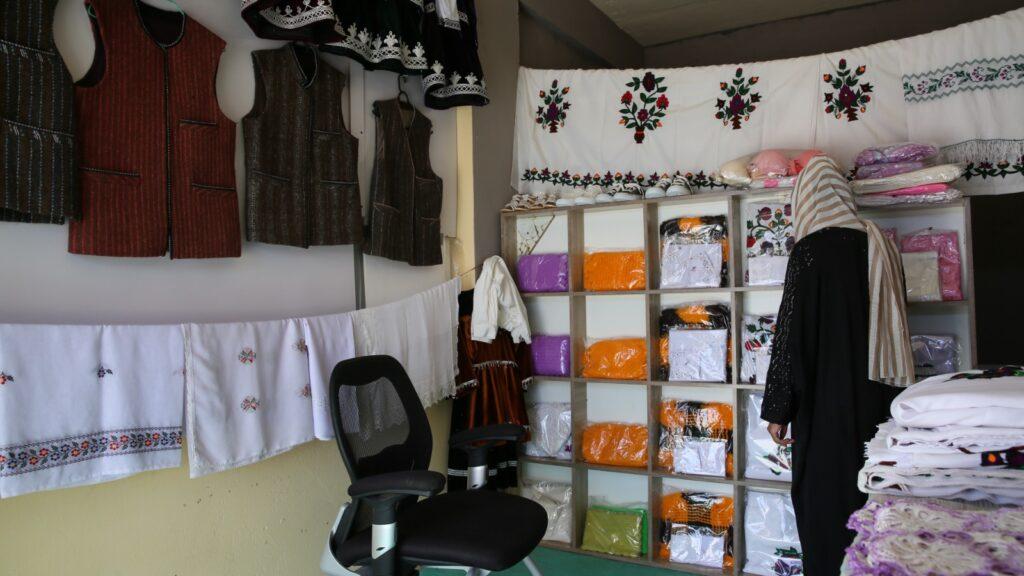

FEROZKOH (Pajhwok): In a corner of Ferozkoh city’s market, the capital of western Ghor, a small shop filled with colourful handicrafts made by Ghor women tells the story of a woman determined to bring their skills from homes to the marketplace and create income opportunities for families.
Marzia Mirzad Mohammadi opened the shop in the city market four months ago after investing 120,000 afghanis. She says some of the products sold at the shop are made by her.
She makes products including felt items, kharajin, embroidered collars, shaltars, women’s clothing, woolen men’s waistcoats and various other items used by women and men.
Overcoming challenges
Starting the shop has not been easy for Marzia. She has faced various social challenges and restrictions in her economic activities, but has tried not to let these obstacles prevent her from pursuing her goal.
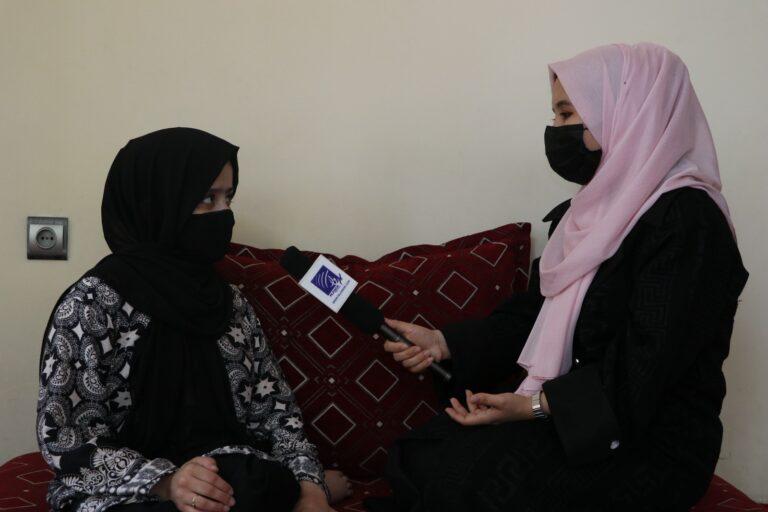
In an exclusive interview with Pajhwok Afghan News, Marzia said she had so far received no support from any organization or institution and was trying to keep her business running through the sale of her products.
“The market is not very good; some days I make no sales at all, while on other days my sales are good,” she said.
Despite these challenges, Marzia believes that if women are given opportunities to showcase their abilities and skills, they can play an important role in strengthening the economies of their families and communities.
“As long as women have opportunities to work and use their abilities, they can play a greater role in the economies of their families and society,” she said.
A market for women’s handicrafts
Marzia says many women in Ghor are skilled in weaving, khamak embroidery, embroidery and other handicrafts, but their products are sold less frequently due to a lack of suitable markets.
She says the idea of opening the shop came from this need: a place where women can bring their handicrafts, display them to customers and have an opportunity to sell them.
She hopes that greater support for domestic products and better promotion of Ghor women’s handicrafts will create more opportunities to sell these products.
Marzia calls on relevant institutions, traders and the public to pay greater attention to women’s handicrafts and support those who work to produce and market these items by purchasing locally made products.
Women’s economic activities: From handicrafts to online sales
Officials from the Ghor Women’s Chamber of Commerce and Industry say the situation of women entrepreneurs in the province has improved compared with previous years.
They say some women, alongside producing handicrafts, have entered various sectors of the market and are selling their products.
Oranus Arifi, an official of the Ghor Women’s Chamber of Commerce and Industry, says Marzia Mirzad Mohammadi is among the women who have opened a shop in Ferozkoh market to sell handicrafts made by herself and other women.
“In recent years, with the establishment of the Women’s Chamber of Commerce and Industry and cooperation from the Directorate of Industry and Commerce, opportunities have been created to support women in various professions. However, due to limited capital, the lack of dedicated markets for women and limited support opportunities, the number of women running larger businesses remains small,” she said.
According to Arifi, most women work in areas such as tailoring, carpet weaving, kilim weaving and handicrafts.
Some are also engaged in producing food items such as sweets, pickles and tomato paste, selling agricultural and livestock products, and online sales. Through these activities, they contribute to covering their families’ expenses.
She stressed that expanding women’s economic activities in Ghor requires training opportunities, increased financial support and dedicated markets for selling their products.
Officials from the Ghor Women’s Chamber of Commerce and Industry say more than 300 women in the province are currently engaged in handicraft production, of whom 25 have obtained official business licenses from the chamber.
Marzia’s small shop may have limited space compared with larger markets, but for her it represents a much bigger effort — an effort to ensure that Ghor women’s art and skills do not remain confined to their homes, but find their way into markets, among customers and, eventually, beyond the province.
sa