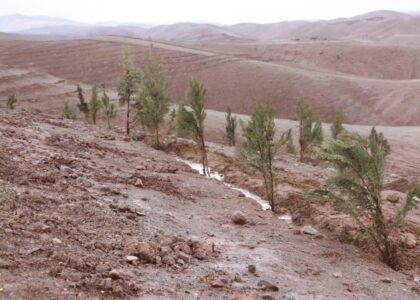
The Municipality of western Herat has launched a large-scale tree-planting campaign in the provincial capital, aiming to plant around 28,000 non-fruit saplings across the city to expand urban green spaces.
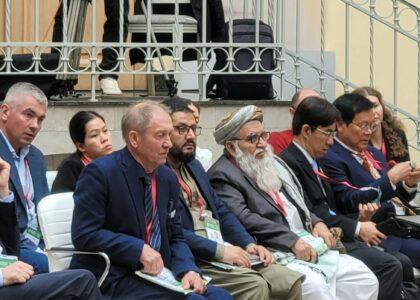
Maulvi Mati-ul-Haq Khalis, Chief of the National Environmental Protection Authority (NEPA), on Monday departed for Russia at the head of a delegation to participate in the third International Forum for the Protection of Breeding of Birds of Prey.
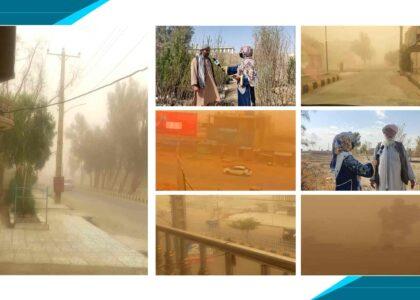
In northwestern Nimroz province where rainfall has declined due to climate change and most of the land is arid and sandy, some residents in Zaranj, the provincial capital, say seasonal 120-day wind has a destructive impact on their lives.
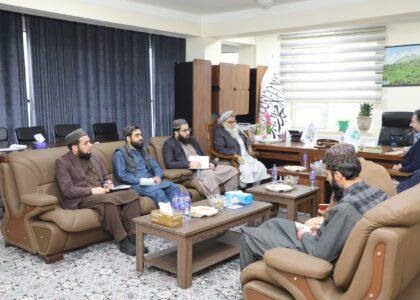
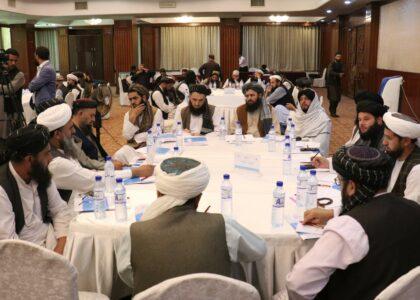
Participants of a gathering in Kabul on Monday identified excessive use of groundwater, burning of harmful fuels, use of weapons during the past wars and deforestation as key contributors to Afghanistan’s environmental challenges.
Afghan and Pakistani officials have emphasized the need for joint efforts to combat wildlife trafficking and have agreed to establish a joint committee for this purpose.
National Environmental Protection Authority (NEPA) chief Maulvi Mati-ul-Haq Khalis, leading a delegation, has participated in the 11th Nevsky World Environmental Congress in Russia.
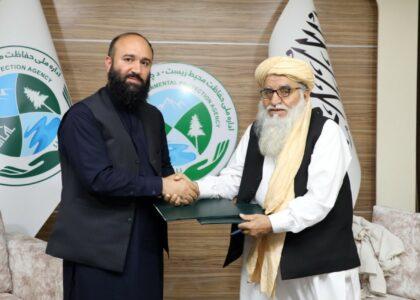
The National Environment Protection Agency (NEPA) has signed a cooperation agreement valued $255,000 with an organization to prepare an environmental assessment report on Afghanistan and carry out a number of environmental activities.
The rising use of plastic bags and other plastic products in Afghanistan is fuelling concerns over their harmful effects on public health and the environment.
KABUL (Pajhwok): The United Nations has earmarked $16.6 million to assist vulnerable communities in Afghanistan, the UN Office for the Coordination of Humanitarian Affairs (OCHA)
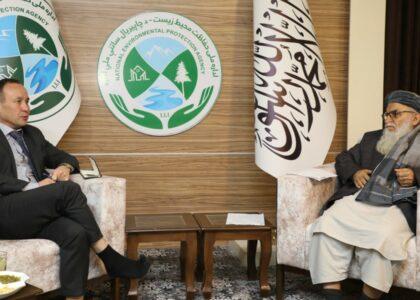
National Environmental Protection Authority (NEPA) chief Maulvi Mati-ul-Haq Khalis has urged inclusion of an Afghan delegation in international environmental events, particularly the upcoming COP30 conference, so that Afghanistan can voice its rightful concerns.
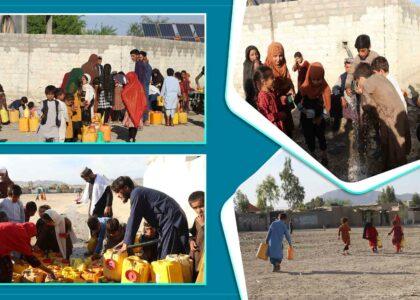
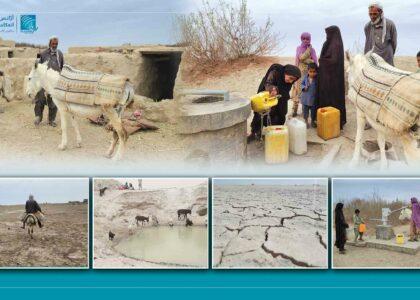
Farmers and livestock owners in Zaranj, the capital of Nimroz province, and several districts have been severely affected by a two-year drought, with many residents migrating elsewhere in search of better living conditions.









GET IN TOUCH
NEWSLETTER
SUGGEST A STORY
PAJHWOK MOBILE APP