KABUL (Pajhwok): Deputy Prime Minister for Economic Affairs Mullah Abdul Ghani Baradar on Tuesday described support for domestic production as the most effective way to counter foreign pressure and economic sanctions and urged people to use locally-produced medicines.
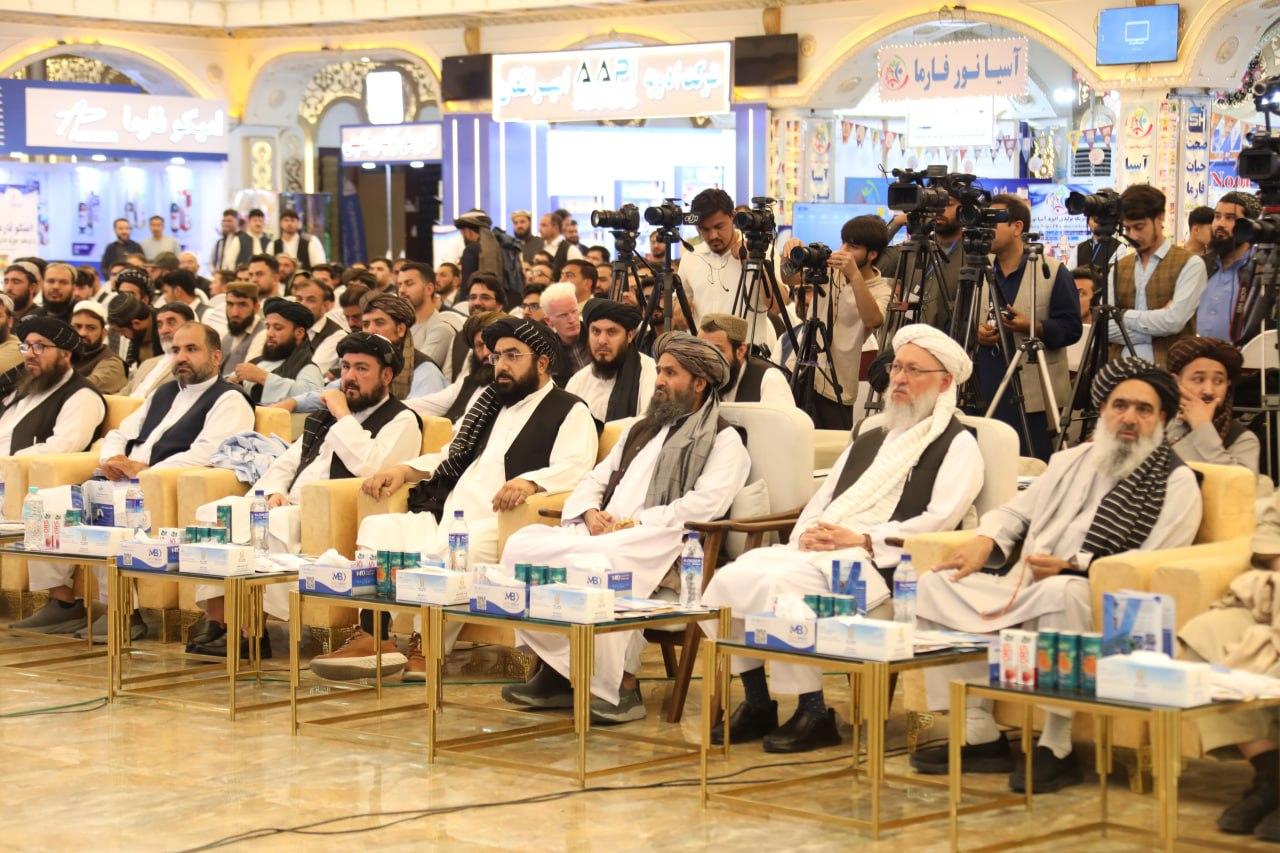
The second Abu Ali Sina Balkhi specialised national and international exhibition, where dozens of pharmaceutical manufacturing companies are showcasing their products, opened in the capital Kabul today (Tuesday) and will continue for four days.
The office of the deputy prime minister for economic affairs said as many as 134 pharmaceutical manufacturing factories are currently operating in Afghanistan with a total investment of 450 million US dollars and are meeting 38 percent of the country’s demand for medicines.
The office said this figure stood at 25 percent eight months ago, but domestic production had increased significantly following a reduction in imports of foreign medicines.
Speaking at the opening ceremony, Baradar said necessary measures have been taken to strengthen Afghanistan’s pharmaceutical sector and that a large portion of the country’s medical needs was now being met through domestic production.
He said strengthening and supporting domestic production was the most effective response to foreign pressure and economic sanctions.
According to him, the recent reduction in medicine imports had enabled Afghanistan’s pharmaceutical sector to grow rapidly within a short period.
However, he said the current achievements were not sufficient given the country’s needs, stressing that pharmaceutical factories should further improve standards and expand production in line with accepted international standards.
Baradar described the organisation of the exhibition as important for strengthening the pharmaceutical sector and urged health officials and the public to trust and use domestically-produced medicines.
He also urged traders and pharmacy owners not to sell medicines at inflated prices or engage in hoarding.
Baradar called on relevant government institutions and officials to take serious measures to prevent such practices.
He also encouraged investors to invest in Afghanistan, assuring them that the Islamic Emirate of Afghanistan (IEA) stood beside them and was working to simplify investment procedures and gradually establish an electronic system.
He said IEA was not only focused on the domestic economy, but also sought stronger regional and international economic connectivity, adding that economic interactions with neighbouring and regional countries had increased.
Meanwhile, Deputy Prime Minister for Administrative Affairs Mawlawi Abdul Salam Hanafi stressed support for domestic products and said notable progress had been made in the health sector since the re-establishment of IEA.
He also called on Afghan specialists living abroad to help strengthen Afghanistan’s healthcare sector by sharing their experience, skills and innovations.
Public Health Minister Mawlawi Noor Jalal Jalali also urged people to use domestically-produced medicines for treatment.
He said the ministry prioritised local pharmaceutical production as a way to reduce dependence on others.
“Afghanistan remained dependent on others for decades. Now it is necessary to use domestic products in order to strengthen local production,” Jalali said.
He added that Afghanistan had abundant raw materials for pharmaceutical production that should be utilised for manufacturing medicines.
kk