KABUL (Pajhwok): While PUBG has become a popular source of entertainment and excitement for many teenagers and young people, psychologists and education experts warn that excessive use of the game can lead to addiction, declining academic performance, weakened social skills and psychological problems.
In solar year 1401, the Cabinet of the Islamic Emirate of Afghanistan instructed the Ministry of Communications and Information Technology to block the PUBG game and TikTok application over concerns about “misleading the younger generation.” However, at present, some teenagers and young people are using VPNs (virtual private networks) to access the game.
However, some users say proper time management and maintaining a balance between education and entertainment can help reduce its negative effects.
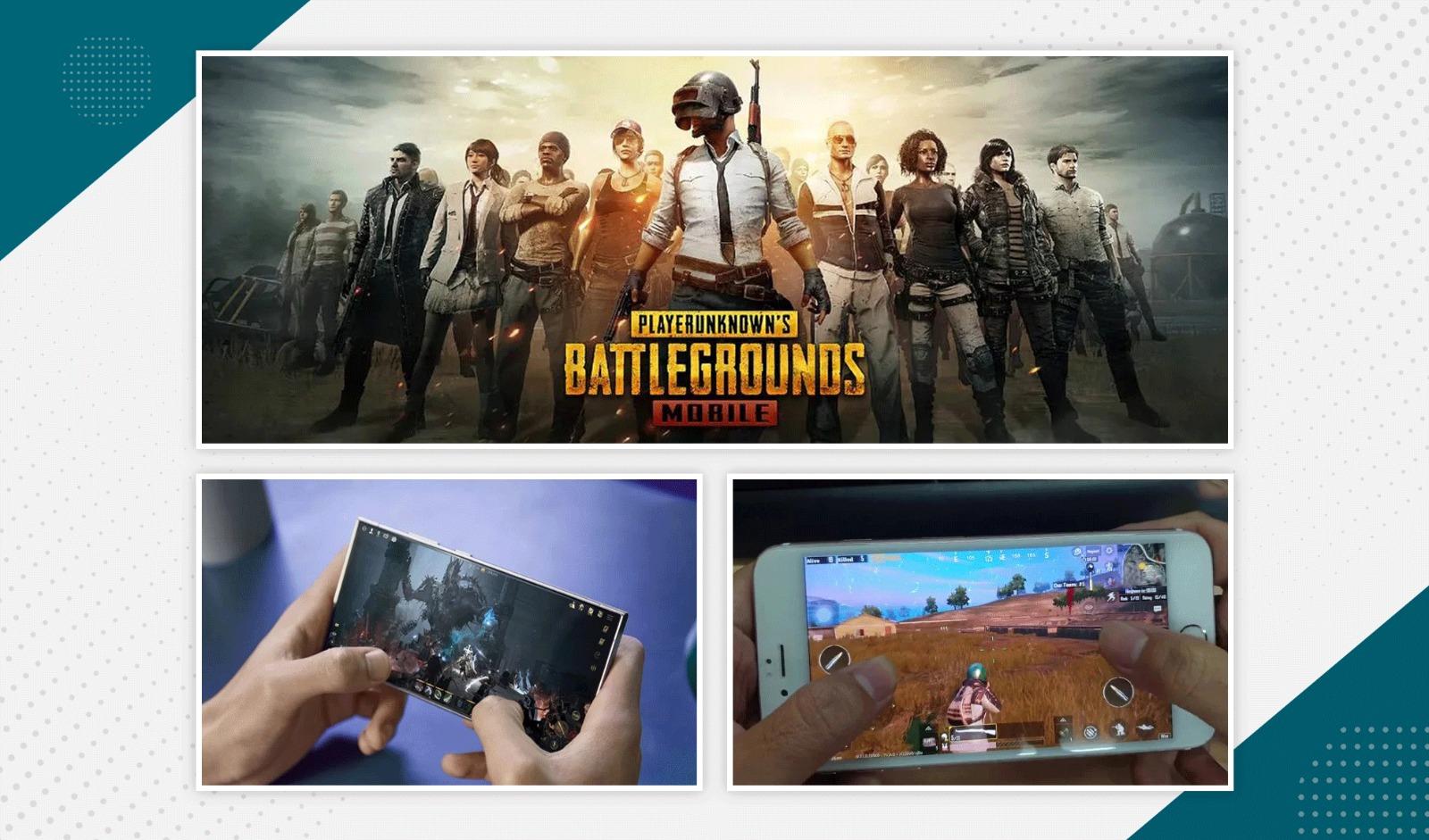
PUBG is a single-player and multiplayer online game in which players compete in a virtual battlefield. In the game, 100 players land in a restricted area and search for weapons, medical supplies and equipment while trying to survive until the end of the match.
Teenagers describe growing dependence on PUBG
The glow of mobile phone screens is the only light inside a small room. Four cousins sit shoulder to shoulder, their fingers moving rapidly across the screens. At times, loud laughter fills the room; at others, excited shouting echoes through the space as they remain absorbed in PUBG’s virtual battlefield.
Among them is Omar, an eighth-grade student who appears more focused on the game than the others. He says he started playing PUBG six months ago and now spends most of his free time on it.
“Before this, I used to play cricket a lot and go outside, but now I spend most of my time playing PUBG and I am no longer interested in cricket,” Omar said.
Similarly, Sohab, a 12th-grade student at a school in Kabul, told Pajhwok he had been playing PUBG for the past year and had become very interested in the mobile game.
“I mostly play PUBG for entertainment and to relieve stress. The game is exciting for me, and at first I used to spend much more time on it,” he said.
However, he added: “I think if someone cannot control their use of it, they may fall behind in their studies and other important responsibilities. In my opinion, moderate use of games is better than excessive use.”
He noted that after starting preparation classes for the university entrance examination, he stopped playing PUBG entirely.
Ajmal, a resident of Samangan province, told Pajhwok: “When I had recently become engaged, I spent too much time talking on the phone, playing PUBG and using the internet. I was always occupied with these things.”
He added: “When I played PUBG or used the internet, it would become very late at night. Even my fiancée advised me to stop, saying it was useless, wasted money, harmed my thinking and kept me from sleeping, and that eventually I would become sick. But I did not listen and told her not to interfere.”
Ajmal said he eventually developed severe headaches because of excessive gaming and had to seek medical treatment. He has now reduced his use of PUBG and says his relationship with his family and fiancée has improved significantly.
He advised others to use mobile phones in moderation to avoid exhaustion and wasting money.
Families try to control PUBG addiction
Abdul Qahir, Sohab’s father, said his son had become interested in PUBG some time ago and spent a large part of his day on the game alongside his studies.
He said that after encouraging his son to focus more on education, Sohab gradually distanced himself from gaming and now spends most of his time solving mathematics problems in preparation for the university entrance examination.
He urged parents to guide their children properly to prevent excessive mobile phone and gaming use and help them maintain balance in different aspects of life.
Meanwhile, Lida Jamili, the mother of Mohammad Omar, said: “To some extent, I have managed to control my sons. At first, both of them spent almost all 24 hours playing games, but now I have set a schedule for them so they can play only one hour during the day and one hour at night.”
Asked why she does not completely prevent her sons from gaming, she said: “They used to go outside too much, so I allowed them to play games to reduce their constant roaming in the streets.”
Experts warn PUBG can lead to addiction, poor academic performance
Abdul Jalil Amarkhil, a psychologist, told Pajhwok that excessive involvement in mobile games during childhood and adolescence could lead to addiction while minds are still developing.
“As a result, teenagers and young people lose focus on their studies and education, which negatively affects their learning,” he said.
He added that this could lead to declining academic performance and long-term dependence on gaming.
According to him, excessive use of mobile games, especially PUBG, deeply affects the behaviour of children and teenagers and may isolate them from society and prevent them from developing social skills.
“When PUBG is stopped, when the phone is taken away, when they spend even an hour without a phone, or when they go somewhere where playing PUBG is impossible, their behaviour changes. They become more aggressive, more irritable, stubborn and argumentative because the only thing feeding their minds is PUBG,” he said.
Amarkhil stressed that PUBG should not be promoted as a tool for improving rapid decision-making skills.
He advised families to involve children in real-life social activities and keep them away from excessive gaming so they could develop practical skills in real environments.
Meanwhile, education activist Suraya Yousufi said games are generally viewed as a form of mental entertainment, but violent games such as PUBG, if used continuously, can cause serious psychological harm to students, including reduced concentration, lower learning capacity and distraction among children and teenagers.
However, she said some games, including PUBG, if played in moderation and in groups, could also have positive effects such as improving teamwork, planning, quick decision-making and problem-solving skills.
According to her, gaming can create dependency among students and reduce their motivation toward studies.
She added that families should set specific gaming schedules for children and teenagers and monitor the types of games they use.
She also emphasized the important role schools play in helping students maintain a balance between education and recreation.
Another education expert, Yalda Amini, said many teenagers turn to gaming to escape stress, loneliness or boredom.
She stressed the importance of promoting reading habits among teenagers and said: “When teenagers find a book that genuinely interests them, it gives them the same sense of excitement and adventure they experience in games. Books can create a calmer and deeper world for them. If reading is done out of interest and not by force, it can gradually reduce gaming.”
According to her, teenagers at this sensitive age are often attracted to books with excitement, strong emotions and engaging stories.
Asked how families could strengthen reading habits among children, Amini said: “Children learn more from the behaviour and actions of their families than from words. If reading is a habit within the family, children will naturally be encouraged toward it. Many families in our country are not literate, but they can still encourage children through storytelling and by allowing them to choose books they enjoy. The goal is not to force children to read, but to make reading and books enjoyable and entertaining for them.”
She believes that to replace gaming with reading, a balance between the two habits should first be established.
“For example, gaming time should be limited while books with exciting stories are chosen for reading. Reading should be calm, voluntary and free from pressure. Families should discuss the stories children read with them. To begin building interest, children can start with illustrated and short books and set small goals such as reading 10 pages daily,” she said.
She added that once young people realize books can also be entertaining, their motivation for reading increases and they gradually distance themselves from gaming.
Three years ago, the cabinet of the Islamic Emirate of Afghanistan (IEA) instructed the Ministry of Communications and Information Technology to block PUBG and the TikTok application.
At the time, Inamullah Samangani, former deputy spokesman for the IEA, said in a video statement: “In its recent meeting, the cabinet of the Islamic Emirate of Afghanistan tasked the Ministry of Communications and Information Technology to block PUBG and TikTok, which lead the younger generation astray, and also prevent broadcasts by channels that publish immoral content and programmes.”
Despite contacting the Ministry of Communications and Information Technology, Pajhwok was unable to obtain the ministry’s comments regarding the report.
sa