NEILI (Pajhwok): Six women in central Daikundi province have established a production company with an initial investment of 60,000 afghanis, but say a lack of funds, equipment and suitable premises is preventing them from expanding their business.
The women say investment and industrial opportunities for women in the province are limited and have called for financial and technical support.
Pshgaman Production Company
The company was established four months ago by six women in Neili, the provincial capital, with an initial investment of 60,000 afghanis. It currently employs nine people, including the six founders.
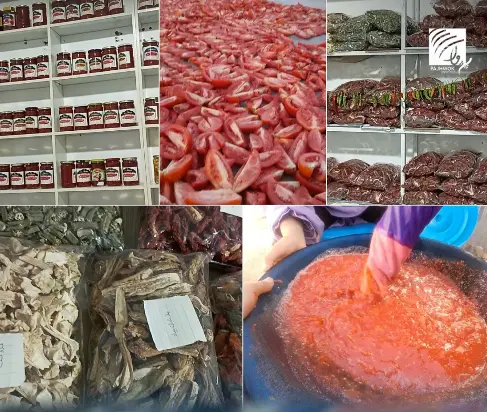
Wajiha Haidari, one of the company’s founders, told Pajhwok Afghan News that, in addition to producing tomato paste, pickles, chutney and pickled cucumbers, the company dried various fruits and vegetables using standard procedures and supplied them to the market.
She said all the raw materials required by the company were purchased from farmers and orchard owners in Daikundi.
“Many women have good ideas and plans for promoting investment, but due to a lack of initial capital and limited opportunities for large-scale economic activities managed by women, they cannot put their plans into practice. That is why we decided to take the first practical steps towards investment with the limited resources available to us,” she said.
Creating jobs for women, supporting farmers
Hafiza Ahmadi, head of the production company, said supporting local farmers, strengthening household economies and creating employment opportunities for women were among the main reasons for establishing the business.
She said the company was established four months ago by six women, including herself, with an initial investment of 60,000 afghanis. Eight girls are currently employed in collecting, producing, processing, packaging and selling its products.
According to Ahmadi, all products are processed and produced inside the workshop, from beginning to end, and are currently sold mainly in markets across the province. Some cafes and restaurants in Neili are also among the company’s main customers.
She added that they planned to expand the company’s activities in the future and sell their products across the country and in foreign markets. Establishing a greenhouse to supply the raw materials needed by the company is also among their future plans.
Ahmadi said they hoped to create jobs for more unemployed women by expanding their activities and, through closer cooperation with farmers, contribute to local economic growth and reduce dependence on imported products.
Challenges facing women entrepreneurs in Daikundi
Ahmadi said they had faced several challenges in establishing and expanding the company, including a lack of capital, suitable premises, production equipment and machinery, as well as limited access to necessary facilities.
She called on partner organisations and traders to support local products and women’s economic initiatives by providing financial and technical assistance, marketing training and better access to larger markets.
Women can achieve economic independence with limited resources
Ahmadi urged girls and women to put their business ideas into practice by relying on their determination and available resources, striving for financial independence and contributing to meeting their families’ needs.
She said experience had shown that starting a business did not always require a large amount of capital, as determination, cooperation and the proper use of available resources could create employment opportunities and promote economic growth.
In her view, government and aid organisations’ support for women’s economic initiatives could not only strengthen their financial independence but also create jobs, improve household living conditions and boost the local economy.
Customers support locally made products
Sardar Mohammadi, the manager of a cafe in Neili that uses the company’s products, praised their quality, saying they were handmade and of good quality.
He added that commercially available tomato paste was used up after two or three cooking sessions, while the company’s paste lasted twice as long because of its thicker consistency and better quality. He said it was also more economical for households.
Mohammadi urged people to use the company’s handmade products, including tomato paste, pickles and chutney, saying they were of good quality and more affordable.
He stressed that public support for domestic products would not only create employment opportunities for women but also encourage them to continue and expand their businesses.
He called on people to support the country’s entrepreneurs and producers by purchasing locally made products.
kk/sa