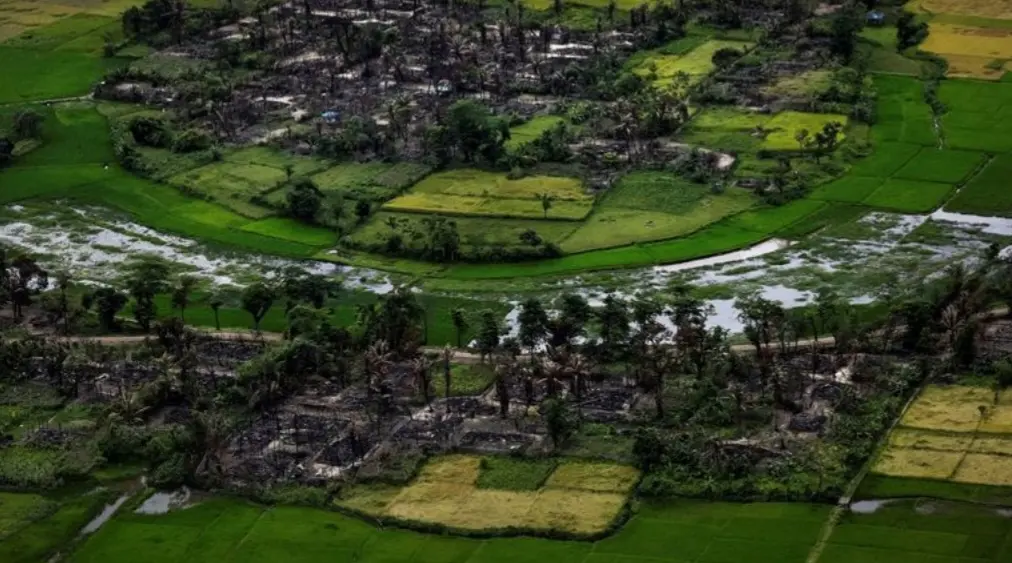
KABUL (Pajhwok): The International Court of Justice (ICJ) is scheduled to deliver its judgment today in a case brought by The Gambia against Myanmar over the genocide of Rohingya Muslims. The ruling could also have legal implications for other genocide-related cases around the world.
According to findings by a United Nations fact-finding mission in 2018, an estimated 10,000 Rohingya Muslims were killed during a military operation by Myanmar’s army in 2017.
However, the mission described this as a conservative estimate, saying the actual death toll was likely to be higher.
The mission’s report stated that at least 392 villages were partially or completely destroyed during the operation. It also found reasonable grounds to conclude that genocidal intent existed behind the military campaign.
Reuters reported that the ICJ, the United Nations’ principal judicial organ, is scheduled to deliver its judgment at 1:30pm Kabul time in The Hague, the Netherlands, on a case filed by The Gambia in 2019.
The Gambia, a West African country, filed a case against Myanmar at the ICJ on 11 November 2019, accusing it of violating the 1948 Convention on the Prevention and Punishment of the Crime of Genocide through its treatment of Rohingya Muslims.
The Gambia has held Myanmar’s government responsible for the 2017 military operation, which forced at least 730,000 Rohingya Muslims to flee their homes and seek refuge in other countries.
According to Reuters, survivors have recounted killings, gang rapes and the burning of villages by Myanmar’s security forces. However, Myanmar’s government has rejected the genocide allegations.
According to the United Nations High Commissioner for Refugees (UNHCR), as of 31 October 2026, more than 1.2 million Rohingya refugees were living in Bangladesh. Around 1.18 million of them were staying in refugee camps in the Cox’s Bazar area.
In the case, the ICJ will examine whether Myanmar violated its obligations under the 1948 Genocide Convention through the actions of its military and other state institutions. The court will also consider whether genocide was committed against Rohingya Muslims.
The Gambia has asked the court to hold Myanmar responsible for the alleged violations, order it to provide reparations for the harm caused and ensure the safe return of Rohingya refugees to their homeland.
Reuters reported that the court’s judgment could have legal implications for other cases, including a case filed by South Africa in 2023 accusing Israel of committing genocide in Gaza.
ICJ judgments are final and binding, with no right of appeal. However, the court has limited means of enforcing its decisions. Under the United Nations Charter, a party may refer non-compliance with an ICJ judgment to the Security Council.
sa