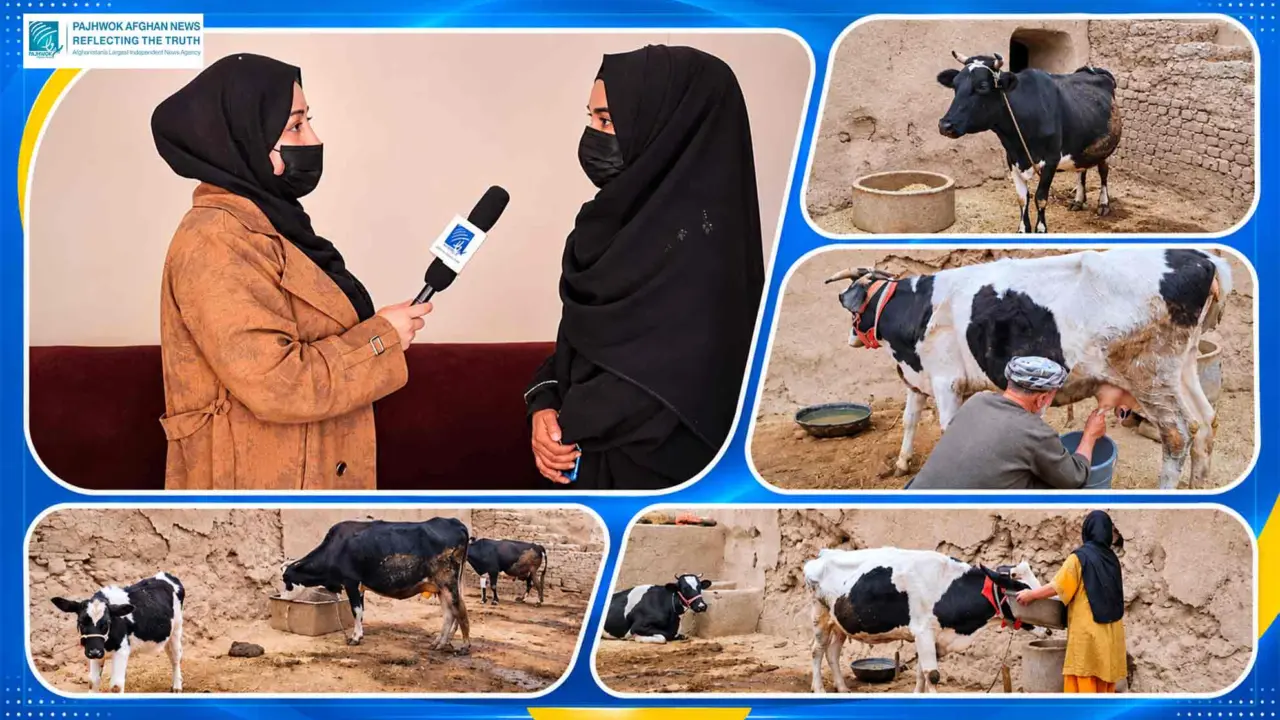
SHIBERGHAN (Pajhwok): A woman entrepreneur in northern Jawzjan province has established a dairy farm with an investment of 150,000 afghanis, providing employment for 10 other women. Some of the workers say that despite receiving low salaries, they are able to meet part of their families’ financial needs through their jobs.
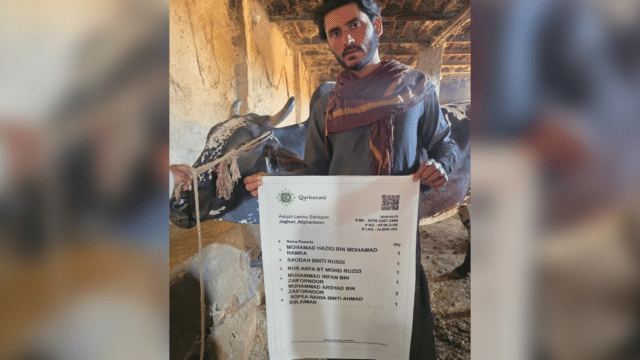
Wahida Rahmani, a resident of Alti Khwaja village in Shiberghan, the provincial capital, told Pajhwok Afghan News that she established the farm with her personal investment two years ago. It currently has seven cows that produce around 80 kilogrammes of milk a day.
She added that the farm had also provided jobs for 10 women, who work in looking after the cows, milking them and preparing dairy products.
Rahmani sells the milk produced at the farm and earns between 50,000 and 60,000 afghanis a month.
She said most of her income came from milk sales and that she had contracts with several companies. A kilogramme of milk sells for 25 afghanis.
Rahmani, who is seeking support from national and international organisations to expand her business, said she had so far received no financial assistance from government institutions or support organisations.
She added that she had managed to launch the business with her limited personal resources, but needed financial assistance and cooperation from relevant institutions to expand the farm and increase its production capacity.
She called on government institutions and support organisations to assist women entrepreneurs by providing facilities and investment so that she could expand her farm and create employment opportunities for more women.
She said supporting women’s economic activities in livestock farming and dairy production could not only create jobs but also increase domestic production and improve families’ economic conditions.
Women support families despite low salaries
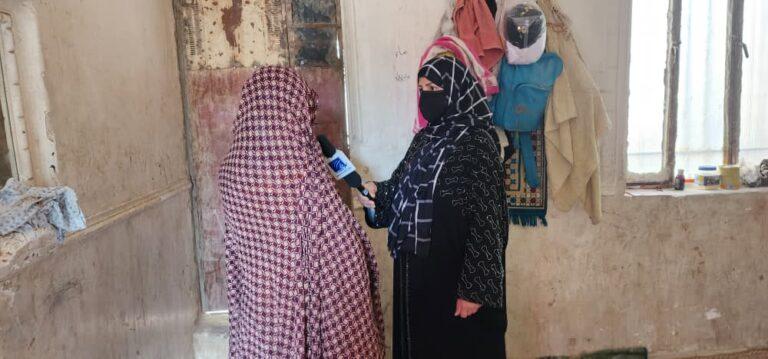
Zahra, 40, a resident of Alti Khwaja village in Shiberghan and a mother of six, is one of the farm workers. After becoming the sole breadwinner following her husband’s death, she works at the farm to meet some of her and her children’s needs.
She told Pajhwok that her husband had died several years ago and that she was now the only breadwinner in the family.
She receives a monthly salary of 2,000 afghanis for her work. She also uses some of the milk and yoghurt produced at the farm to meet her family’s food needs.
Zahra said she was happy to have this job and could meet some of her children’s needs by continuing to work.
She called on the government and support organisations to create more employment opportunities for women so they could earn a better income and provide better care for their children.
Najla, another farm worker, is 20 years old and also lives in the same village. She said she had been unemployed for some time because of a lack of job opportunities, but working at the farm had enabled her to meet some of her and her family’s financial needs.
She receives a monthly salary of 2,000 afghanis and tries to contribute to her family’s expenses despite her limited income.
Najla said: “Before getting this job, I had no other employment opportunity, and everywhere was closed. That is why I came to this farm, where I now work. I am happy that I can keep myself occupied, help my family and meet some of my daily needs through my work.”
She said unemployment and staying at home had negatively affected her mental well-being. However, since starting work at the farm, she had felt that having a daily routine and being in a workplace had improved her mood and reduced her psychological stress.
Shah Gul, another woman working at the farm and a resident of Alti Khwaja village, said she had been working there for around eight months and was able to cover part of her family’s living expenses through the job.
A mother of seven, she is responsible for supporting her family. She said that because of her husband’s illness and inability to work, she and her eldest son had to meet most of the family’s needs.
She added that she had faced serious financial difficulties before finding the job, but now, despite receiving a low salary, she could contribute to her family’s daily expenses.
Shah Gul said: “I have been working at this farm for eight months, and I am very happy since I started here because I have found a job and can help meet my family’s needs. I have seven children and am responsible for supporting my family. My husband is ill and unable to work, so my eldest son and I meet all the family’s expenses.”
She explained that despite financial difficulties, she was satisfied with having a job and keeping herself occupied. She hoped that more farms of this kind would be established so that women in need could benefit from similar opportunities.
Najla and Shah Gul also called on the government, public institutions and organisations to support women entrepreneurs and create more jobs for unemployed women and girls by establishing and expanding similar businesses, enabling them to contribute to their families’ livelihoods.
More than 500 women work in Jawzjan’s agriculture sector
Dr. Samiullah Hakimi, head of the Livestock and Animal Health at the Department of Agriculture, Irrigation and Livestock, said seven livestock farms, around 300 poultry farms and fish-breeding farms were currently operating in the province.
He said women also played an important role in various areas of the sector.
He explained that of the seven livestock farms operating in Jawzjan, one was in Khamab district and the remaining six were in the provincial capital.
Hakimi added that women were engaged in livestock farming, poultry farming and silkworm breeding, with women making up a large part of the workforce in some of these activities.
He noted: “The Department of Agriculture, Irrigation and Livestock, in cooperation with organisations, has tried to provide assistance, within its capacity, to the livestock sector and women’s activities, and to create employment and business opportunities for them.”
He said more than 500 women were currently working in various agriculture and livestock-related activities in Jawzjan province.
kk